
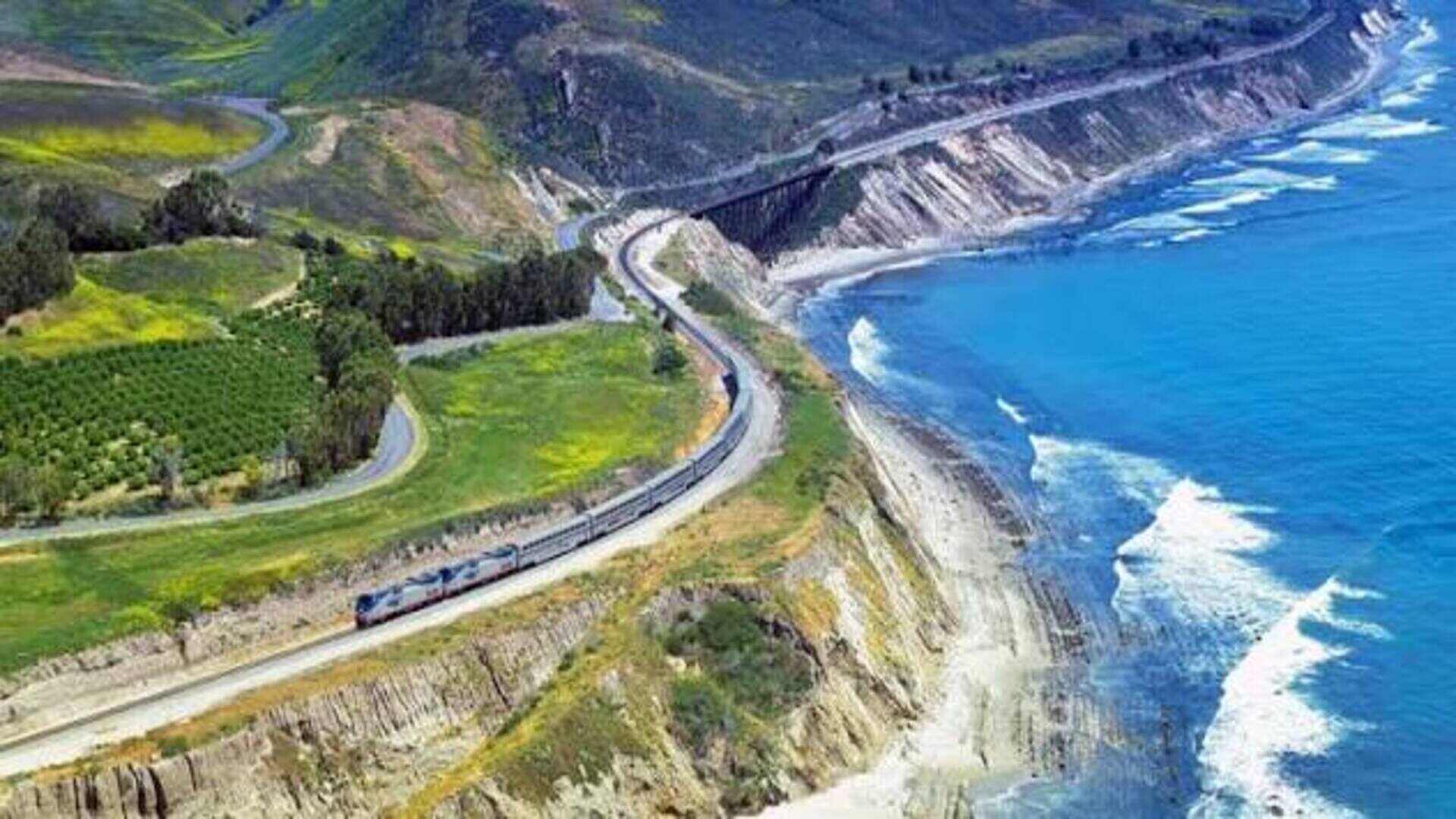
To reach the heart of Silicon Valley, relaxed and smart, the train takes you directly to San Jose, California. Whether you’re traveling for business, to visit family, to attend a tech conference, or to visit, train travel is the best option compared to flying or driving. San Jose’s southernmost location in the Bay Area makes the city the most accessible in Northern California, as the city has great rail services both for short regional trips and for long-distance trips across the country.
This guide on train travel to San Jose covers all you need to know about train travel to San Jose and includes various factors covering routes, timetables, prices of train tickets, stations, train seats, travel advice for different seasons, and travel tips. The guide is useful for everyone, from first-time train passengers to frequent work travelers, and for all passengers with practical questions on ticket booking.
Why Take a Train to San Jose? Top Reasons to Choose Rail Travel
A train ride over other options for transportation has a number of benefits, particularly for those traveling to San Jose. Train travel has gained popularity in the last few years because more people are seeking more comfortable, safer, as well as less-stressful options than flying.
- There are no security lines at airports or the long process of checking in
- A lot more legroom and mobility throughout the journey
- Amazing views from the California coast and in the surrounding countryside
- It is more environmentally friendly than flying or driving by yourself
- Stations in the City Center, which means you don’t have to endure long flights and airport transfers
- The ability to work, relax, or rest comfortably throughout the trip
- Reduced stress when traveling on busy highways
- Weight restrictions on baggage are not like those of airlines.
- Possibility to eat onboard and cafe car rides on lengthy routes
- Lower fatigue levels compared to highway driving
Train travel is a favorite with those who are from close California cities, such as Sacramento, Oakland, and Los Angeles, as well as long-distance travellers from different regions in the United States. A lot of business travelers choose trains for shorter journeys because the stations typically are located in urban cities, which reduces the commute times compared with airports, which are usually located further away from the city.
A further reason why people prefer train travel is its reliability. Even though flights can be impacted by weather-related delays in addition to cancellations and lengthy security lines, trains offer a much greater degree of predictability, particularly in regional areas like that of Capitol Corridor. For families traveling with kids as well as for those who prefer peaceful train travel, trains give passengers the ability to move about or use restrooms as well as take a break during their trip.
Which Trains Go to San Jose? Major Rail Services Explained
Many different rail services operate in and out of San Jose. Knowing how to navigate each rail system depending on the plans of your journey will help you develop a good itinerary.
| Rail Service | Type of Travel | Coverage Area |
| Amtrak Capitol Corridor | Regional | Sacramento to San Jose |
| Amtrak Coast Starlight | Long-distance | Seattle to Los Angeles (via San Jose) |
| Caltrain | Commuter | San Francisco to Gilroy (via San Jose) |
| Amtrak San Joaquins (with connecting bus) | Regional | Central Valley to San Jose |
Amtrak manages the majority of long-distance and interstate lines, and Caltrain is the most popular alternative for commuters on short travel in or out of the Bay Area. If you’re traveling from another U.S. state, Amtrak is the most popular option and is often paired with the connecting Thruway buses for the last stretch to San Jose.
Amtrak Capitol Corridor
This is among the most popular railway routes in California, which connects Sacramento, Oakland, Berkeley and San Jose. It’s designed to facilitate continuous daily trips, featuring numerous departures during the day. It is perfect for commuters as well as people who are just passing through.
Amtrak Coast Starlight
The train that runs for a long distance is located on the West Coast, connecting Seattle, Portland, Sacramento, Oakland, San Jose, and Los Angeles. The train is loved by those who wish to take in stunning views of mountains and the coast on a long journey.
Caltrain
Caltrain is an express train service for commuters that runs from San Francisco to San Jose and then further south to Gilroy. It is frequently employed by everyday commuters, students, as well as travellers who are traveling for short distances in San Francisco’s Bay Area.
Amtrak San Joaquins
The service links the Central Valley region to the Bay Area, often requiring an additional Thruway bus for the trip to San Jose.
Selecting the best option is based on the location you are starting from, along with your budget as well as the amount of time you’re prepared to travel. If you are planning a short trip within the region, Capitol Corridor and Caltrain are typically the best choices. If you want to take longer, more picturesque trips, Coast Starlight is a popular choice. Coast Starlight is a popular option.
Popular Train Routes to San Jose From Major US Cities
When traveling across the United States via rail to get to San Jose, passengers can either take a direct Amtrak train or take a combination of train and bus travel. Below is a list of the most popular and easiest-to-follow rail routes.
| Departure City | Approx. Travel Time | Route Type |
| Los Angeles, CA | 9 to 11 hours | Direct (Coast Starlight) |
| Sacramento, CA | 2.5 to 3.5 hours | Direct (Capitol Corridor) |
| Oakland, CA | 1 to 1.5 hours | Direct (Capitol Corridor) |
| Seattle, WA | 22 to 24 hours | Direct (Coast Starlight) |
| Chicago, IL | 2 to 3 days | Connecting (multiple transfers) |
| New York, NY | 3 to 4 days | Connecting (multiple transfers) |
Runs from the East Coast to San Jose. Travelers from Chicago or New York would have to fly to auto-connect in either Emeryville or Sacramento.
For domestic travelers from California, travel is fairly straightforward. Sacramento and Oakland have reliable and frequent services and several daily trains. For travelers from outside the state, some degree of planning is required, since many cross-country trips require multiple segments and include lengthy layovers.
Some long-distance routes will also pass by some interesting cities. This allows the traveler a unique opportunity to stopover at one of the interesting cities to break up the travel. This is often not possible when traveling by air.
NYC to San Jose Train: Schedule, Duration & Ticket Tips
The journey between New York City and San Jose via train is an extended trip that typically takes three to four days depending on the connectivity and layover timings. There’s no direct train route; therefore, passengers typically travel via a combination of longer-distance Amtrak trains like the Southwest Chief, the Lake Shore Limited, and the California Zephyr, followed by connections to Chicago and Los Angeles, and finally the Capitol Corridor or Coast Starlight to San Jose.
Important points to keep in mind during this journey
- Plan your reservations in advance, as long-distance routes have only a limited number of seats
- You should plan at least one night’s stay, or layover, between transfers
- Sleeper cabins can be rented for comfort and convenience on long-distance routes
- The price of tickets varies widely based on the class, booking period, and
- Make sure you check the connection window carefully in order so that you don’t miss any transfers
- Include essentials in your backpack that are easy to access on long trips
- Take into consideration travel insurance coverage for longer connections
The route can take much more time than flying; many people choose to travel it due to its scenic beauty and potential to visit several states along the way. The road often traverses different landscapes, beginning with the Midwest plains through the Rocky Mountains and finally the California coast, providing an experience in travel that is unbeatable by flying.
Since this is a long-distance travel route, it’s essential to arrange food, rest stops, as well as connection times with care. Long-distance Amtrak trains generally offer eating cars, cafe cars, as well as sleeper cabins that provide additional comfort on overnight journeys. Sleeper cabin passengers usually find this option to be enjoyable, due to the fact that it removes hotels on the time of layovers.
The traveler should be aware of possible delays. These occur more frequently on long-distance routes because of shared railway infrastructure and freight trains. The creation of buffers between connections is an excellent method to ensure that they don’t miss onward trains.
San Jose Train Travel Tips for First-Time Passengers
If you’re new to traveling by train or visiting San Jose for the first time, these helpful strategies will guide you to plan your trip more smoothly.
- Be on time at least 30 mins prior to departure time for boarding and luggage handling
- Have a valid ID with a photo, particularly when traveling long-distance Amtrak routes.
- Review rules for baggage allowances when checking in and regulations, which differ between Amtrak and Caltrain
- Get the official rail service application to receive real-time updates on schedules and train times
- You should keep your ticket in reach whether printed or stored via your smartphone
- Layer up, since temperatures in train cabins can differ
- Make sure to charge your devices prior to travel, even though many trains are equipped with outlets for charging.
- Take snacks and water with you, especially for road trips with no dining vehicles
- Get familiar with the layout of the station in advance, if it is possible.
- Secure important documents and valuable items inside a safe luggage bag
Making reservations a couple of weeks in advance, particularly during high-demand travel periods, could assist you in securing lower prices and a seat that is more convenient. For first-time travelers, it is recommended to review the cancellation and refund policy for their rail company and be aware that these may differ according to the type of ticket and the time in which the changes can be made.
It’s also a good idea to join notifications via app or email from your rail company, as these notifications can notify you about platform changes and delays as well as schedule modifications in real-time. If you are who are traveling with elderly relatives or children, ensuring the accessibility options at both the stations of departure and arrival prior to departure can help make your trip more enjoyable.
Direct and Connecting Train Routes to San Jose
The distinction between a trip involving a direct train and a connecting train is necessary for planning arrival times and layover time.
Direct Routes: Most direct trains to San Jose are only offered from California (Sacramento, Oakland, Emeryville, and Los Angeles) on the Capitol Corridor or Coast Starlight. These trains are easier to plan since they have fewer steps involving transfers.
Connecting Routes: Out-of-state passengers will most likely have to make connections. An example of a connecting route might be a long-distance train to either Los Angeles, Chicago, or Emeryville, and then another train to San Jose. Connecting routes will take more time to plan, especially regarding the travel times and the number of layovers.
| Route Type | Example | Number of Transfers |
| Direct | Sacramento to San Jose | 0 |
| Connecting | Chicago to San Jose | 1 to 2 |
| Connecting | New York to San Jose | 2 to 3 |
Before buying your ticket, make sure to check the most recent Amtrak schedule. Due to seasonal changes, connection times and route availability may differ. When booking connecting routes, it is often cheaper to buy one ticket rather than multiple tickets for these connecting routes. This will help you avoid dealing with delays from your connecting ticket.
When booking connecting routes, keep in mind that some routes may require a change to a bus from a train. Many routes, even distant ones, have this Thruway bus connection system. These bus systems have set schedules to coordinate with the trains, but traffic and weather conditions may also affect the scheduled time for your connection. Plan to have some extra time.
Business Class vs Coach on San Jose Trains
Amtrak and Caltrain both have varying classes of seating that can make choosing the correct one for your personal preference and budget easy.
| Feature | Coach Class | Business Class |
| Seat Width | Standard | Wider, more legroom |
| Price | Lower | Higher |
| Priority Boarding | No | Yes |
| Complimentary Snacks | Limited | Often included |
| Quiet Car Option | Sometimes | Usually available |
| Power Outlets | Yes | Yes |
Coach class is ideal for short trips such as the Capitol Corridor between Sacramento and San Jose. On longer trips, the added perks of business class become evident.
For business trips in particular, many business class seats include a work area and reduce distractions. For budget travelers, the abundant space in standard seating on the Capitol Corridor absorbs the discomfort of a short trip.
For passengers on the longer Coast Starlight route, accommodations in business class include private cabins and, for a higher cost, provide a bed and full-service meals.
Although it is more expensive, business class is more comfortable for longer trips and germane to the needs of overnight trips. There are also business class fares that are so significantly reduced that it is definitely worth it to compare the cost of a business class ticket to a coach class ticket.
San Jose Train Station: Everything You Need to Know About San Jose-Rensselaer Station
The train station that serves San Jose is officially known as San Jose Diridon Station, which is located in the downtown area of San Jose. It’s one of the largest multimodal hubs within San Jose’s Bay Area, connecting Amtrak, Caltrain, and local transport services.
The station’s key information:
- It is centrally located and within easy walking distance to the downtown area
- It serves as a hub for Amtrak Capitol Corridor and Coast Starlight trains
- It also connects with Caltrain commuter service
- Ticket counters, waiting areas, as well as basic amenities for passengers.
- Connected to local bus routes and ride-share pick-up points
- In the process of upgrading infrastructure, we hope to enhance future connectivity, which includes the planned integration of high-speed rail
- Parking facilities are available nearby to visitors arriving via vehicle
- Accessible facilities for people with disabilities
If you find the title “San Jose-Rensselaer Station” while looking up information, remember that Rensselaer is actually an independent Amtrak station inside New York State. San Jose’s main and accurate station designation will be Diridon Station, so always make sure to double-check station names before booking connecting tickets to long-distance travel.
Diridon Station has long served as the main transport hub in this region. South Bay region, and the future plans for expansion are set to transform it into a greater hub in the future as California continues to make investments in its railway infrastructure, with potential connections to high-speed rail. Station users usually find it to be well-marked with clear links to public transportation options in the area, including buses as well as trains, which makes it easy to continue on your travels once you’ve arrived in San Jose.
If you are a newcomer to the local area, it’s important to arrange your transfer from the station well prior to departure, whether it is arranging for a ride-share service or using a local bus or even renting a vehicle nearby.
How to Book Train Tickets to San Jose: Step-by-Step Guide
The process of booking a train ticket for San Jose is a simple procedure if you follow these instructions.
- Go to the official Amtrak or Caltrain website, or access their mobile apps
- Select your departure city and the destination (San Jose), as well as the date of travel.
- Check out the available train options as well as their timings and fare classes
- Choose the seating type you prefer, like coach or business
- Include the passenger’s details as well as any other special needs
- Pick the method of payment you want to use and then complete the reservation
- Print or save your e-ticket to use for your trip
- Subscribe to schedule notifications when you travel long distances
- Double-check the station names and the platform information prior to leaving
When connecting routes that are long distance, it’s best to make your entire trip in one reservation as often as possible, as this will usually ensure the connection, even in case the earlier train has a delay. Booking directly through the official site of the rail operator or mobile app is usually the most secure option, as it guarantees accurate pricing and access to customer service when there are delays or cancellations.
Some travelers also prefer to look at the prices of fares for a few days prior to and following the date they plan to travel, as prices may fluctuate based upon demand. A reward or loyalty program, when it is available, may assist frequent travelers to save on expenses over the course of time.
San Jose Train Ticket Price: How Much Does It Cost & How to Save Money
Train tickets to San Jose have a lot of variation based on distance traveled, class of ticket, and booking time.
| Route | Approx. Price Range (Coach) | Approx. Price Range (Business/Sleeper) |
| Sacramento to San Jose | $25 to $45 | $45 to $70 |
| Oakland to San Jose | $15 to $30 | $30 to $50 |
| Los Angeles to San Jose | $60 to $100 | $100 to $180 |
| Cross-country (e.g., Chicago) | $200 to $400+ | $400 to $900+ |
How to save money when purchasing the cost of San Jose train tickets:
- Plan at least 2 – four weeks in advance to secure more affordable rates
- It is best to go on a weekday instead of weekend days if possible.
- Find Amtrak promotions as well as seasonal discount offers
- Think about a rail pass when you are planning multiple journeys within an unspecified time
- Do not make last-minute reservations during peak travel season and holidays.
- Check out fares for the nearby dates to get lower prices
- Find out about senior, student, or military discounts, if you qualify
People who plan multiple trips in California could also profit from multiple-ride tickets that are offered by regional service providers such as Capitol Corridor, which could cut the total cost per excursion. When traveling for long distances, making reservations for sleeping accommodations ahead of time is crucial because they tend to be more popular than regular coach seats.
Best Time to Visit San Jose by Train: Seasonal Travel Tips
The most ideal time to journey from San Jose by train largely depends on the weather conditions as well as the trends in ticket prices.
- Spring (March through May): A mild climate and low ticket prices make this an ideal travel window
- Summer (June through August): Season of peak tourism that is characterized by higher prices and busier trains
- Autumn (September through November): The weather is pleasant and generally better availability of tickets
- Winter (December through February): Lower prices during holidays; however, there are occasional delays due to weather.
To get the best balance between moderate temperatures and low prices, the spring months and early autumn are typically considered to be ideal timeframes for planning your journey by train to San Jose.
The summer months typically bring greater crowds, especially along picturesque routes such as Coast Starlight. Coast Starlight, since many travellers plan trips during the summer months. It is essential to guarantee seats at a reasonable price and to get a good seat.
Travelling in winter can provide an opportunity to save money; however, travellers should prepare to be prepared for delays that may occur due to the weather in the northern regions, especially on routes that traverse mountainous regions. Be sure to check weather warnings prior to traveling in winter is an excellent method for trips that are long distance.
Seasonal holidays, including Christmas, Thanksgiving, as well as New Year, typically see increases in both costs as well as passenger numbers; therefore, it is highly recommended to book your tickets in advance when traveling in these periods.
Train vs Bus vs Car to San Jose: Which Is the Best Way to Travel?
There are a number of factors influencing how you get from point A to point B; cost, time, and how you prefer to spend that time play a role in deciding between a train, bus, or car.
| Factor | Train | Bus | Car |
| Comfort | High | Moderate | Depends on driver fatigue |
| Cost | Moderate to High | Low | Variable (fuel, tolls) |
| Travel Time | Moderate | Longer | Depends on traffic |
| Flexibility | Fixed schedule | Fixed schedule | Fully flexible |
| Scenic Value | High | Moderate | High (self-paced) |
| Environmental Impact | Lower | Lower | Higher (solo travel) |
Depending on your budget and comfort preferences, here are some things to consider when you decide to travel by train, bus, or car. Trains are the more comfortable option over long distances, and you still have some flexibility in scenery, like on bus routes. They are the best choice of the three for in-state travel within California. Driving is your best flexibility choice for sure and the worst for parking, especially in San Jose. For those travelers concerned with a tight budget, buses are the way to go. Long routes mean long travel time, but it will be the least expensive option. If you prefer to drive and are concerned about the added distraction of having to drive, take the train because it is more productive.
For business travel, most travelers will choose a train because it is a less stressful option than having to drive. They will bring their work along, which is a better choice than driving. Live and enjoy the scenery that you miss when driving. If you have to transport a lot of people or a lot of luggage, driving a car might be the obvious choice. The train and bus options don’t really suit that need that much. For a mix of budget, schedule and comfort, traveling by train might be the best choice. Long-distance travel by train is more enjoyable than either traveling by bus or by car.
Frequently Asked Questions
1. Is there a straight train to San Jose from New York?
No, there is no direct train. Passengers have to make one, or maybe even two, connections to get to San Jose from New York.
2. What is the main train station in San Jose?
San Jose Diridon is the main train station for both Amtrak and Caltrain.
3. How long does it take to go from LA to San Jose by train?
It should take about 9 to 11 hours on the Coast Starlight.
4. What train line gets San Jose to Sacramento?
There is the Amtrak Capitol Corridor that connects them directly.
5. Can I book San Jose trains online?
Sure, book tickets on either the Amtrak or Caltrain website, or their mobile app.
6. How do I get to San Jose the cheapest with trains?
Booking in advance in coach on the regional Corridor is usually the lowest fare.
7. Does Caltrain travel to both SF and San Jose?
Yes, of course, Caltrain travels to San Francisco and San Jose.
8. Is business class a good deal for regional trips to San Jose?
For regional trips, coach is fine, but if you want a longer trip, for comfort, go for business class.
9. Does San Jose have luggage restrictions with trains?
Yes, both Amtrak and Caltrain have restrictions on luggage, so be sure to look at the restrictions before the trip.
10. What season is the best time to travel to San Jose by train?
Spring and Fall have nice weather with lower-cost tickets.