
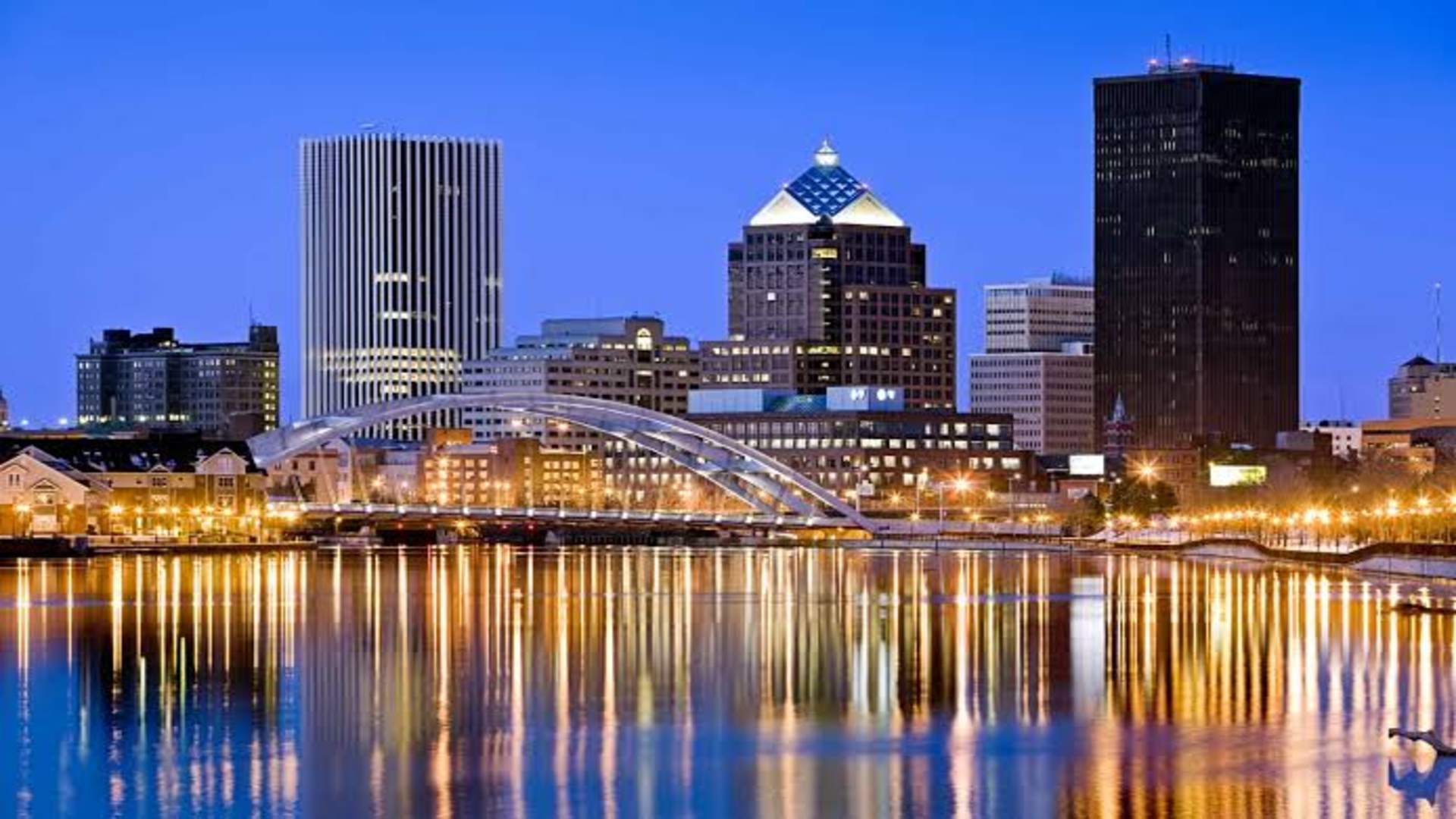
Rochester is a central hub for New York State rail travel. Here, three major Amtrak lines connect at a modern station. Whether you are traveling from NYC to the Finger Lakes, connecting to Toronto in Rochester, or wanting to avoid I-90, the train is a great option to get to the “Flour City.” We cover everything you need to know to travel to Rochester by rail: routes, fare, helpful hints, and info about the station.
The Empire Service, Lake Shore Limited, and the Maple Leaf line put Rochester among the most accessible mid-sized cities for rail travel for the entire Northeast. There aren’t many comparable-sized cities with as much rail travel. This makes Rochester a convenient stop for travelers of New York State and International itineraries. We cover helpful hints, rail options, and every ticket type you need to get to Rochester by rail.
Why Take a Train to Rochester? Top Reasons to Choose Rail Travel
We should first understand why so many choose the train to Rochester over other options before looking at the details.
- Central, downtown arrival: Rochester’s Amtrak station drops you right in the city, just minutes from downtown, the Strong National Museum of Play, and the Eastman Museum – no rental car or long airport shuttle required.
- No airport hassle: Skip security lines, baggage fees, and early check-ins. You can typically arrive 20-30 minutes before departure and walk straight to the platform.
- Scenic Hudson Valley and Finger Lakes views: Trains heading to Rochester roll along the Hudson River and through upstate New York’s rolling countryside – a far more relaxing view than a highway median.
- Budget-friendly fares: Advance-purchase coach tickets to Rochester often undercut the combined cost of gas, tolls, and parking, especially for solo travelers.
- Productive travel time: Free Wi-Fi, power outlets, and table seating mean you can work, read, or nap instead of watching the road.
- Fewer weather-related disruptions: While not immune to delays, trains are generally less affected by snow and ice than driving through upstate New York winters.
- Direct connections to major hubs: Rochester’s station connects to New York City, Albany, Syracuse, Buffalo, Niagara Falls, and even Toronto and Chicago without switching stations.
- For short and medium-distance trips within New York State, and for travelers who value comfort over speed, the train is consistently one of the most convenient ways to reach Rochester.
- Ideal for students and families: Rochester is home to several colleges and universities, and rail travel is a popular choice for students heading home for breaks without needing a car on campus. Families traveling with young children also benefit from the ability to walk around the train, visit the café car, and avoid the confined seating of a car or bus.
- Easier group coordination: When traveling with friends or colleagues, coordinating a single train departure is often simpler than managing multiple cars or splitting up between flights, especially when everyone is coming from different directions along the Empire Corridor.
- A more scenic, memorable journey: Beyond simple convenience, many travelers choose the train specifically for the experience itself. The ride along the Hudson River, through the rolling hills of the Mohawk Valley, and into the Finger Lakes region offers views that simply aren’t visible from an interstate highway or an airplane window. For many, the journey becomes part of the trip rather than just a means of getting there.
Note: Taken together, these advantages explain why the train remains one of the top choices for travelers heading to Rochester, whether it’s a quick weekend visit or a longer stay to explore the surrounding region.
Which Trains Go to Rochester? Major Rail Services Explained
Rochester’s Louise M. Slaughter Station is served by three Amtrak routes, together offering about eight trains a day through the city. Here’s a quick breakdown of each.
| Train Service | Route Covered | Frequency | Type of Journey |
| Empire Service | New York City ↔ Albany ↔ Syracuse ↔ Rochester ↔ Buffalo ↔ Niagara Falls | Multiple daily departures | Daytime regional service |
| Lake Shore Limited | New York City/Boston ↔ Albany ↔ Rochester ↔ Buffalo ↔ Chicago | 1 daily round trip (with a Boston section) | Overnight long-distance service |
| Maple Leaf | New York City ↔ Albany ↔ Syracuse ↔ Rochester ↔ Buffalo ↔ Niagara Falls ↔ Toronto | 1 daily round trip | International daytime service |
- Empire Service connects New York City to Niagara Falls and many points in between, including Poughkeepsie, Albany, Syracuse, Rochester, and Buffalo. Its many departures throughout the day make it ideal for a day trip or for business travel. It is the fastest option of the three.
- Lake Shore Limited connects New York City and Boston with Chicago. It is a good option if you are traveling to the Midwest or if you want to sleep through part of the trip. It offers sleeping accommodations that include all meals for the price of $162.
- Maple Leaf is the option if your itinerary includes traveling to Canada. It offers a good route to Toronto, with many stops along the way, including Niagara Falls.
- Overall, it is a matter of personal preference among these three trains. The Empire Service is your best option if you need day-of train departures. The Lake Shore Limited is your best option because it saves a night of hotel costs if you need to sleep on the train. The Maple Leaf allows you to avoid an additional booking if your trip takes you through ROC and into Toronto.
- It’s important to note that most of the shared routes between New York City and Buffalo (known as the Empire Corridor) for all three services utilize the same physical corridor. This results in a similar customer experience across all three services (cafe car, WiFi, and scenery). The three services do differ in their schedules, the quality of service, and final arrival destinations.
Popular Train Routes to Rochester From Major US Cities
Rochester is accessible by train from roughly 30 other cities across the Northeast and Midwest, thanks to its position on the Empire Corridor. Below is a snapshot of the most searched routes.
| From City | Typical Train(s) Used | Approx. Travel Time | Approx. Starting Fare |
| New York City, NY | Empire Service, Lake Shore Limited | 6h 57m – 7h 43m | From $57 |
| Boston, MA | Lake Shore Limited | 10-12 hours | From $90 |
| Chicago, IL | Lake Shore Limited | 12-14 hours | From $110 |
| Albany, NY | Empire Service, Lake Shore Limited, Maple Leaf | 2.5-3 hours | From $30 |
| Syracuse, NY | Empire Service, Maple Leaf | Approx. 1.5 hours | From $25 |
| Buffalo, NY | Empire Service, Lake Shore Limited, Maple Leaf | Approx. 1 hour | From $20 |
| Toronto, Canada | Maple Leaf | 6-7 hours | From $60 |
| Niagara Falls, NY | Empire Service, Maple Leaf | Approx. 1.5 hours | From $25 |
Note: Fares fluctuate based on demand, season, and how far in advance you book. Always check the official Amtrak site or a trusted ticket aggregator for real-time pricing.
A closer look at the most popular routes:
- New York City to Rochester remains the single most searched and most heavily booked route, thanks to the large population base in the New York metro area and Rochester’s popularity as both a college town and a Finger Lakes gateway.
- Chicago to Rochester appeals to travelers who want to avoid a full day of driving through Ohio, Pennsylvania, and western New York, trading it for an overnight sleep on the Lake Shore Limited instead.
- Boston to Rochester requires a change at Albany, since the Lake Shore Limited splits into a Boston section and a New York City section east of the city – but the connection is timed to be relatively smooth.
- Toronto to Rochester is unique in that it’s an international route, meaning passengers should account for border crossing procedures and have a valid passport ready, along with slightly earlier check-in times than a purely domestic trip.
- Regional New York State routes – Albany, Syracuse, and Buffalo to Rochester – are typically short, affordable hops well suited to same-day business trips or quick weekend visits, and they run frequently enough that same-day bookings are usually possible without much price penalty.
Note: Because Rochester functions as a mid-corridor hub, many travelers combine multiple short legs into a single upstate New York itinerary – for example, flying into Buffalo, traveling to Rochester for a night, then continuing to Syracuse or Albany before heading home.
NYC to Rochester Train: Schedule, Duration & Ticket Tips
The New York City-Rochester corridor is by far the most popular train route into the city, so it deserves a closer look.
- Duration: The approximate travel time for a train ride from New York to Rochester is 7 hours and 15 minutes. With the Empire Service train, you can reduce your journey time to 6 hours and 57 minutes, as it covers 370 miles.
- Departure points: Trains depart from Moynihan Train Hall/Penn Station in Manhattan and arrive directly at Louise M. Slaughter Station in downtown Rochester.
- Morning arrivals: You do have options if you need to arrive in Rochester before noon. There is an overnight train, the Lake Shore Limited, that leaves New York late and gets you to Rochester very early in the morning. Taking an early train of the Empire Service will allow you to arrive at Rochester around noon.
| Train | Typical Departure (NYC) | Typical Arrival (Rochester) | Approx. Duration |
| Empire Service (early) | Early morning | Early afternoon | ~7 hours |
| Empire Service (midday) | Late morning/afternoon | Evening | ~7-7.5 hours |
| Lake Shore Limited (overnight) | Late evening | Early morning | ~7.5-8 hours |
Ticket tips for the NYC-Rochester route:
- Book at least 2-3 weeks ahead for the lowest coach fares, especially around holidays and university move-in/move-out weekends (Rochester is home to several colleges).
- Travel midweek (Tuesday-Thursday) for cheaper fares than weekend departures.
- Consider the overnight Lake Shore Limited if you want to save a day of your trip and don’t mind sleeping in a reclining coach seat or paying extra for a roomette.
- Sign up for Amtrak Guest Rewards – points earned on this route can be redeemed for future travel.
- Check both directions’ pricing – sometimes a Friday-to-Monday round trip costs less than a Sunday-to-Wednesday one due to demand patterns.
- Watch the calendar around college terms. Because Rochester is home to several universities, fares can spike around fall move-in, Thanksgiving, winter break, and spring move-out dates. Booking a month or more ahead during these windows can save a meaningful amount.
- Compare the Empire Service against the Lake Shore Limited on price, not just time. The overnight train is occasionally cheaper in coach class than a daytime Empire Service seat, even though it takes slightly longer – worth checking if your schedule is flexible.
- Pick your seat with the view in mind. On northbound trains toward Rochester, sitting on the left side of the train gives the best views of the Hudson River during the first couple of hours out of New York City.
Note: The New York City to Rochester corridor is well-trodden, with numerous daily trips (including connecting options) available for travelers who search across a range of dates. Because it’s one of Amtrak’s busiest state-supported corridors, service tends to be frequent and reliable compared with some long-distance national routes.
Rochester Train Travel Tips for First-Time Passengers
If this is your first time riding Amtrak into Rochester, a little preparation goes a long way.
- Arrive early: Aim to be at the station at least 20-30 minutes before departure, especially during peak travel seasons.
- Download the Amtrak app: It lets you check real-time status, receive gate and track notifications, and access your ticket without printing.
- Pack light but smart: Amtrak allows generous carry-on and checked baggage allowances compared to airlines, but elevators and stairs at some stations mean lighter bags are easier to manage.
- Bring your own snacks: While café cars offer food and drinks on longer routes, selection can be limited – pack essentials if you have dietary preferences.
- Charge your devices beforehand: Power outlets are available at most seats, but it’s wise not to rely solely on them.
- Dress in layers: Train cars can run cool, particularly overnight on the Lake Shore Limited.
- Know your platform: Rochester’s station has a single island platform, so once you’re through the station building, following signage to the platform is straightforward.
- Double-check your train number, not just the departure time, since multiple trains can depart around similar windows during busy periods.
- Understand boarding procedures. Unlike air travel, there are no assigned boarding groups on most Amtrak trains – once your gate is announced, you can board and choose any open seat in your class of service (Business or Coach passengers board in their respective sections).
- Keep ID handy. While Amtrak doesn’t always require ID for domestic coach travel, having a photo ID ready speeds things up, especially if you booked with a Guest Rewards number or need to make a same-day change.
- Plan your connection buffer. If you’re connecting through Albany or New York Penn Station, build in at least 20-30 minutes between trains in case of minor delays.
- Check accessibility needs in advance. Louise M. Slaughter Station and its trains are fully accessible, but travelers needing wheelchair assistance should notify Amtrak ahead of time to ensure smooth boarding and platform support.
- Track weather advisories in winter. Upstate New York’s lake-effect snow can occasionally slow schedules; the Amtrak app’s real-time status feature is the fastest way to stay updated.
Note: First-time riders often find that the biggest adjustment from flying or driving is simply the pace – trains encourage you to relax rather than rush, and Rochester-bound routes in particular are designed with comfort in mind.
Direct and Connecting Train Routes to Rochester
Depending on where you’re traveling from, you may be able to reach Rochester directly, or you may need to make a connection – usually at Albany-Rensselaer or New York Penn Station.
| Route Type | Example Origin | Connection Needed? | Notes |
| Direct | New York City | No | Empire Service and Lake Shore Limited run straight through |
| Direct | Chicago | No | Lake Shore Limited runs the full route |
| Direct | Toronto | No | Maple Leaf runs the full route |
| Connecting | Boston | Yes (Albany) | Lake Shore Limited splits into NYC and Boston sections at Albany |
| Connecting | Philadelphia | Yes (New York Penn Station) | Transfer to Empire Service or Lake Shore Limited |
| Connecting | Washington, D.C. | Yes (New York Penn Station) | Northeast Regional to NYC, then transfer north |
| Connecting | Montreal | Yes (multiple transfers) | No direct Amtrak service; typically requires connecting via Albany or NYC |
Tip: With Amtrak, when you book a train with a transfer, their system will usually combine the two train journeys into one booking. This ensures that if the first leg of the journey is running late and you miss the connection, you are not at a loss. If you purchase the two train journeys on two separate tickets, you lose that guarantee. It is therefore much safer to book the leg with the connection.
- Why Albany matters as a connection point: Where the Lake Shore Limited divides between New York City and Boston and where several Empire Service and Maple Leaf trains meet is where Albany-Rensselaer is located. If you are coming from New England and want to be flexible for your next trip, Albany is maybe the best place to change trains. It has the largest daily volume of trains with the best options to connect. If you miss the connection, most of the time you can leave the same day.
- Why New York Penn Station matters: As the busiest train station in the country, Penn Station (including the newer Moynihan Train Hall) is the preferred train station for travelers coming from the Northeast Corridor – Washington, D.C., Philadelphia, Baltimore, and more. Nearly all of these travelers will join the Empire Service or Lake Shore Limited trains to Rochester from here.
Note: For travelers unsure whether their trip requires a connection, Amtrak’s trip planner will automatically show whether a direct train exists for your chosen origin and date, or whether a connection is necessary – it’s worth checking a few different departure times, since not every time slot offers a direct option.
Business Class vs Coach on Rochester Trains
Empire Service trains to Rochester offer two classes of service: Coach and Business Class. Here’s how they compare.
| Feature | Coach Class | Business Class |
| Seat width & recline | Standard, comfortable seating | Wider seats, extra legroom |
| Price difference | Base fare | Typically $15-$30 more than coach |
| Priority boarding | No | Yes |
| Complimentary drinks/snacks | No | Yes, on most Empire Service trains |
| Power outlets | Yes | Yes |
| Wi-Fi | Yes | Yes |
| Quiet car option | Sometimes available | Not usually needed – quieter by default |
| Best for | Budget travelers, short trips | Business travelers, longer daytime trips |
- For a short hop like Syracuse to Rochester, Coach is perfectly comfortable and the smart budget choice. For the full New York City to Rochester run, many travelers find Business Class worth the upgrade – the extra legroom and complimentary refreshments make the roughly seven-hour ride noticeably more relaxing.
- Note that the Lake Shore Limited doesn’t offer Business Class in the same way; instead, it offers Coach, Roomettes, and Bedrooms as part of its overnight sleeper service, since it’s a long-distance train rather than a regional corridor train.
Rochester Train Station: Everything You Need to Know About Louise M. Slaughter Station
Rochester’s Amtrak station is one of the newest and most attractive stops on the entire Empire Corridor.
- Location and address: The station address is 320 Central Ave, Rochester, NY 14605.
- History: The facility was built in 1914, and Amtrak came to the facility in 1978. The facility was modernized and reopened in 2017. The state and city, Amtrak, New York State, and the federal Department of Transportation collaborated on the design and planning that led to the modernized intermodal facility. The modernized facility was the outcome of about 15 years of planning and visioning by the stakeholders from the area and the state.
- Design: The contemporary, illuminated station employs the original design of the New York Central Depot, which the 1960’s removed, as an example of history with modern design.
- Routes served: Three Amtrak lines – the Lake Shore Limited, the Empire Service, and the Maple Leaf – stop at this station.
- Station code: ROC (Amtrak) / ROCH (Via Rail).
| Amenity | Available? |
| Enclosed waiting area | Yes |
| Wheelchair accessibility | Yes, fully accessible |
| Elevator | Yes |
| Parking | Yes (short and long-term) |
| Ticket sales office | Yes |
| Restrooms | Yes |
| Wi-Fi | Not currently available in the station |
| Bicycle facilities | Yes |
| Nearby bus connections | RTS local buses, Megabus, New York Trailways |
- Getting to the station: The station is just east of High Falls on the north side of Rochester and has easy connections to the local bus network of the Rochester-Genesee Regional Transportation Authority.
- From the airport: Greater Rochester International Airport is close to downtown, and <cite index=”8-1″>a taxi ride from the airport to the Amtrak station takes about 10 minutes and costs around $20</cite>.
- Nearby attractions: The station sits close to High Falls, downtown Rochester, and is a short ride from the Strong National Museum of Play, George Eastman Museum, and the city’s famous “garbage plate” eateries – a local specialty worth trying if you have time before your train.
- Getting around once you arrive: From Louise M. Slaughter Station, downtown Rochester is easily reachable on foot or by a short rideshare trip. RTS buses connect the station to most neighborhoods, and several taxi companies operate directly from the station forecourt. If you’re staying for more than a day, many visitors choose to rent a car locally to explore the wider Finger Lakes region, since some wineries and lakeside towns are best reached by road.
- What makes this station stand out: Compared to many mid-sized city Amtrak stops around the country, Louise M. Slaughter Station is notable for being a genuinely modern, purpose-built intermodal hub rather than a converted historic building or a bare-bones platform. Its light-filled waiting area, clean signage, and direct bus connections make it one of the more pleasant stations along the entire Empire Corridor, and a point of local pride for Rochester residents.
How to Book Train Tickets to Rochester: Step-by-Step Guide
Booking a train ticket to Rochester is straightforward whether you use Amtrak directly or a third-party platform.
| Step | What to Do |
| 1 | Visit Amtrak.com or open the Amtrak app |
| 2 | Enter Rochester (ROC) as your destination and your origin city |
| 3 | Select your travel dates and number of passengers |
| 4 | Compare available trains (Empire Service, Lake Shore Limited, Maple Leaf) by time and price |
| 5 | Choose your class of service (Coach, Business, or Sleeper on long-distance trains) |
| 6 | Enter passenger details and any Guest Rewards number |
| 7 | Review baggage policy and any add-ons (pets, bikes, extra bags) |
| 8 | Complete payment and receive your e-ticket |
| 9 | Save your ticket to the app or print a copy for boarding |
| 10 | Arrive at the station early and board using your QR code or printed ticket |
Alternative booking methods:
- By phone: Call Amtrak’s reservation line to book with an agent, useful if you need to combine complex connections.
- At the station: Louise M. Slaughter Station has a staffed ticket counter for in-person purchases.
- Third-party platforms: Sites that aggregate train and bus fares can be useful for comparing Amtrak against bus alternatives side by side, though booking directly with Amtrak is usually best for flexibility with changes and refunds.
Booking tips:
- Fares are typically cheapest 14-30 days before departure.
- Off-peak weekday trains are generally less expensive than Friday/Sunday trains.
- Amtrak fares are dynamic, meaning prices rise as seats sell – booking early locks in lower rates.
- Always confirm your train number and platform on the day of travel, as schedules can shift seasonally.
Rochester Train Ticket Price: How Much Does It Cost & How to Save Money
Ticket prices to Rochester vary significantly based on origin, how far ahead you book, and the day of travel.
| Route | Starting Coach Fare | Starting Business Class Fare |
| New York City → Rochester | From $57 | From $75-$90 |
| Albany → Rochester | From $30 | From $45 |
| Syracuse → Rochester | From $25 | From $35 |
| Buffalo → Rochester | From $20 | From $30 |
| Boston → Rochester (via Lake Shore Limited) | From $90 | N/A (Roomette from ~$162) |
| Toronto → Rochester (via Maple Leaf) | From $60 | N/A |
How to save money on Rochester train tickets:
- Book early. Fares climb as departure dates near, so purchasing 2-4 weeks in advance typically secures the lowest coach prices.
- Travel off-peak. Midweek departures (Tuesday-Thursday) and non-holiday periods are usually cheaper than weekends.
- Use flexible date search tools. Amtrak’s website allows you to compare fares across a range of nearby dates to spot the cheapest day to travel.
- Watch for Amtrak promotions. Seasonal sales, companion fare deals, and student/senior discounts can meaningfully cut costs.
- Join Amtrak Guest Rewards. Frequent travelers can accumulate points toward free future trips.
- Consider a connecting route if it’s cheaper. Occasionally, booking to Albany and connecting separately can be less expensive than a single through-fare – though this comes with added risk if a connection is missed.
- Travel in a group carefully. Amtrak doesn’t always offer flat group discounts, but booking multiple seats together in one transaction can sometimes reveal bundled savings.
- Check senior, military, and student discounts, which Amtrak offers on eligible fares.
Best Time to Visit Rochester by Train: Seasonal Travel Tips
Rochester has four distinct seasons, and each affects both the travel experience and ticket pricing.
| Season | Weather & Experience | Train Travel Notes |
| Spring (Apr-May) | Mild temperatures, blooming Highland Park lilacs | Moderate fares, good time to avoid summer crowds |
| Summer (Jun-Aug) | Warm, festival season (Rochester Lilac Festival, Jazz Festival) | Higher demand and prices, especially on weekends |
| Fall (Sep-Oct) | Crisp air, scenic Finger Lakes foliage | Popular for weekend getaways; book ahead for fall foliage weekends |
| Winter (Nov-Mar) | Cold with significant lake-effect snow | Cheaper fares, but check for weather-related delays |
Best overall time to visit by train: Late spring through early fall offers the most reliable service and the most scenic ride along the Hudson River and upstate New York countryside. If you’re chasing lower fares and don’t mind bundling up, winter (outside of holiday weeks) tends to have the cheapest tickets – just build in extra time in case of snow-related schedule adjustments.
Events worth timing your trip around:
- Rochester Lilac Festival (May)
- Rochester International Jazz Festival (June)
- Fall foliage season in the nearby Finger Lakes (late September-October)
- Holiday markets and winter festivities (December)
Planning around ticket demand, not just weather: In addition to the seasons, there are specific calendar events that trigger price spikes for tickets to Rochester that are unrelated to the weather. The Lilac and Jazz Festivals both attract a lot of tourists and can make the Empire Service trains more expensive in the days surrounding both festivals. The same thing occurs with university-related travel (moving in/out of school, Thanksgiving Break, and Spring Graduation). These dates are more in demand than a typical weekend. If you can be flexible, moving your trip to a couple of days away from these peak times can greatly cut your expenses.
A note on winter travel: Proximity to Lake Ontario places Rochester in a lake-effect snow belt. While Amtrak crews have the winter management experience along the Empire Corridor, it is still important to check the Amtrak app for updates in the time between December and March, and also avoid planning tight connections in that time.
Train vs Bus vs Car to Rochester: Which Is the Best Way to Travel?
Choosing between train, bus, and car depends on your budget, schedule, and comfort priorities.
| Factor | Train | Bus | Car |
| Comfort | High – spacious seats, room to move | Moderate – cramped for long trips | Depends on driver fatigue |
| Cost | Moderate | Usually cheapest | Variable (gas, tolls, parking) |
| Speed (NYC to Rochester) | ~7 hours | ~7-8 hours | ~5.5-6 hours (traffic dependent) |
| Reliability | Generally reliable, some weather delays | Subject to road traffic and weather | Fully dependent on driver and road conditions |
| Downtown drop-off | Yes | Yes | No – requires parking |
| Ability to work/relax | High (tables, outlets, Wi-Fi) | Moderate | None (if driving) |
| Environmental impact | Lower emissions per passenger | Lower emissions per passenger | Higher emissions per passenger |
| Best for | Comfort-focused travelers, business trips | Budget travelers | Flexibility, multiple stops, heavy luggage |
Bottom line:
- Choose the train if you want a relaxing, productive ride directly into downtown Rochester without airport-style hassle.
- Choose the bus if your absolute priority is the lowest possible fare and you don’t mind a longer, less comfortable ride.
- Choose the car if you’re traveling with a group, need to carry lots of luggage, or plan to explore multiple towns around the Finger Lakes region on your own schedule.
Note: For most solo and couple travelers heading from New York City or other Empire Corridor cities, the train strikes the best balance of comfort, cost, and convenience.
A deeper look at each option:
- Train: Beyond the numbers, the train’s biggest advantage is predictability paired with comfort. You board in a downtown or centrally located station, walk freely around the train, and arrive in downtown Rochester without needing to navigate airport security or highway traffic. The trade-off is that trains run on fixed schedules, so travelers with very specific or last-minute timing needs may find the departure options more limited than driving.
- Bus: Bus travel to Rochester, often operated by carriers serving the same downtown terminal area near the Amtrak station, is typically the cheapest option in dollar terms. However, buses are more exposed to highway traffic and weather delays, seating tends to be tighter for a multi-hour trip, and there’s generally less space to work or move around compared to a train.
- Car: Driving offers the most flexibility – you can stop wherever you like, carry as much luggage as fits, and set your own schedule. It’s often the best choice for groups of three or more, since the per-person cost of gas and tolls can undercut individual train or bus fares. The downsides are driver fatigue on longer trips, parking costs once you arrive in Rochester, and full exposure to traffic and winter weather conditions along the route.
Note: Ultimately, the “best” option depends on your specific priorities for a given trip – and many travelers find that different choices make sense for different journeys, even along the same New York City to Rochester corridor.
Frequently Asked Questions
1. What train station serves Rochester, NY?
Rochester is served by the Louise M. Slaughter Station, located at 320 Central Avenue in downtown Rochester. It’s a modern, fully accessible intermodal station that opened in 2017.
2. How long is the train ride from New York City to Rochester?
The trip typically takes around 7 hours and 15 minutes, with the fastest Empire Service trains completing the journey in just under 7 hours.
3. Which Amtrak trains stop in Rochester?
Three Amtrak services stop in Rochester: the Empire Service, the Lake Shore Limited, and the Maple Leaf, together offering about eight trains through the city each day.
4. How much does a train ticket to Rochester cost?
Fares vary by origin and how far in advance you book. Tickets from New York City typically start around $57 for coach class, while shorter routes like Buffalo to Rochester can start as low as $20.
5. Is there a direct train from Rochester to Toronto?
Yes. The Maple Leaf route runs daily between New York City and Toronto, stopping in Rochester along the way, making it a convenient direct option for cross-border travel.
6. Does the Rochester train station have parking?
Yes, Louise M. Slaughter Station offers both short-term and long-term parking options for passengers.
7. Can I take an overnight train to Rochester?
Yes. The Lake Shore Limited operates overnight, connecting New York City and Boston with Chicago via Rochester, and offers coach seating as well as private roomettes and bedrooms.
8. What is the best way to save money on Rochester train tickets?
Book at least 2-4 weeks in advance, travel midweek instead of on weekends, and watch for Amtrak promotions or Guest Rewards point redemptions to reduce your fare.
9. How far is the Rochester train station from the airport?
The Greater Rochester International Airport is a short taxi ride from the Amtrak station – typically around a 10-minute drive.
10. Is Business Class worth it on the Rochester train route?
For longer trips like New York City to Rochester, many travelers find Business Class worthwhile for the extra legroom, priority boarding, and complimentary refreshments. For shorter regional hops, Coach Class is usually sufficient, since the time saved by upgrading is minimal on trips under two hours.