
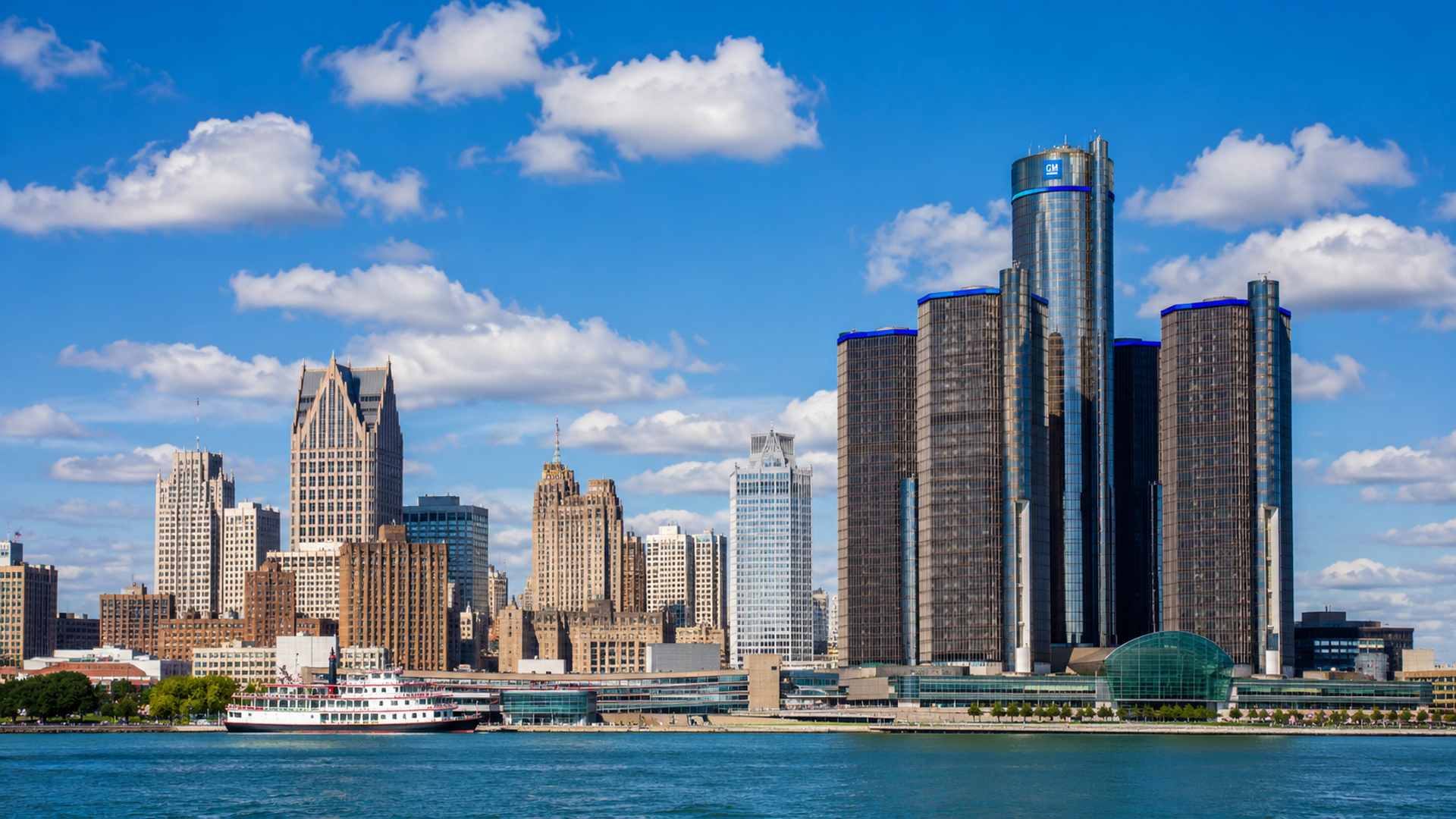
Are you planning to take a train to the Motor City? Traveling from Chicago, New York, or other cities along the Midwest rail corridor, the train is the most relaxing, scenic, and inexpensive means of reaching Detroit. Detroit is mainly serviced by Amtrak’s Wolverine Service, part of the larger Michigan Services, which connect Detroit to Chicago and other Midwest cities daily.
In this comprehensive guide, we cover all the details on trains to Detroit, including routes, schedules, and ticket prices, along with every detail for the station, tips for booking, and the best season to travel. Throughout the guide, to aid in your planning, you will find comparison tables along with the top.
Why Take a Train to Detroit?
Traveling by train to Detroit effectively combines comfort and convenience. Thousands of customers choose rail services for the following reasons:
- There’s no hassle at the airport – skip the security lines, baggage charges, and lengthy check-in lines. Walk towards the platform, and then take the train.
- City-center stations – Amtrak stations located in Detroit as well as Dearborn are situated near downtown areas, museums, and business districts. This is in contrast to many airports, which are far from city centers.
- Beautiful Midwest landscapes Views of the Midwest – The Wolverine route takes you through Michigan agricultural land, tiny townships, and scenic lakeside views, providing a tranquil drive in comparison to the rush hour.
- Comfortable seating – Large seats with additional legroom, recline alternatives, huge windows, along with onboard toilets, ensure that long trips are enjoyable.
- Access to free WiFi and power outlets – Connect to the internet and get tasks done on your journey.
- A generous baggage allowance- allows you to carry greater baggage than low-cost airlines will allow, usually without additional cost.
- Children are able to move about, and the space is bigger than a car bus seat.
- A green option, a train is generally more eco– friendly and has less carbon footprint for each passenger as compared to flying or driving on your own.
- Cheap fares- especially on shorter flights such as Chicago to Detroit. Train tickets tend to be cheaper than those on last-minute flights.
For travel between the Midwest and Detroit, the train offers the best combination of value and comfort.
Which Trains Go to Detroit?
Detroit has only one train service, the Amtrak Wolverine Service, which operates within the Michigan Services corridor, which is a joint effort between Amtrak and the Michigan Department of Transportation (MDOT). Here are some key services:
| Train Service | Route Covered | Frequency | Connects Detroit To |
| Wolverine Service | Chicago – Detroit – Pontiac | 3 daily round trips | Chicago, Ann Arbor, Dearborn, Jackson, Kalamazoo, Battle Creek, Pontiac |
| Blue Water | Chicago – Port Huron | Daily | Connects to the same Michigan Line corridor (transfer for Detroit-area travel) |
| Lake Shore Limited | Chicago – New York/Boston | Daily | Connects at Chicago (or via Thruway bus at Toledo) for East Coast travelers |
| Amtrak Thruway Motorcoach | Various Michigan/Ohio cities | Scheduled connections | Links smaller cities to Wolverine and Lake Shore Limited stops |
The Wolverine Service, located on the older Michigan Line, is the only train that goes to Detroit from Chicago. It stops at Chicago, Pontiac, and Detroit, along with other places, and covers 304 miles. The train divides into different segments, one of which lasts 6 to 6.5 hours to get to the Detroit vicinity from Chicago.
Travelers on the east coast who wish to get to Detroit by train will need to use Chicago to transfer from an indirect train or, in the case of the Lake Shore Limited, use a Thruway motorcoach connection at Toledo, Ohio.
Popular Train Routes to Detroit From Major US Cities
Here’s a summary of train routes to Detroit from various cities and how long they take. Please check Amtrak’s website for exact times and delays, as they can vary for each route.
| From City | Route / Connection | Approx. Travel Time | Direct or Connecting |
| Chicago, IL | Wolverine Service | ~5.5 – 6.5 hours | Direct |
| Ann Arbor, MI | Wolverine Service | ~30 – 45 minutes | Direct |
| Kalamazoo, MI | Wolverine Service | ~2.5 – 3 hours | Direct |
| Jackson, MI | Wolverine Service | ~1.5 – 2 hours | Direct |
| New York, NY | Lake Shore Limited + Wolverine (via Chicago/Toledo) | ~19 – 25 hours | Connecting |
| Washington, D.C. | Capitol Limited + Wolverine (via Chicago) | ~17 – 19 hours | Connecting |
| Boston, MA | Lake Shore Limited + Wolverine (via Chicago) | ~24+ hours | Connecting |
| Pontiac, MI | Wolverine Service | ~1 hour from Detroit | Direct |
The Amtrak train system is designed to facilitate easy travel for those within Michigan and the neighboring Midwestern states. Longer journeys that cross state lines rely on travel through Chicago because of the way the Amtrak system is set up around Chicago Union Station.
Schedule, Duration & Ticket Tips
The New York to Detroit train route is one of the most popular searches, and for good reason. There is not a single, direct train available for this route. To get to Detroit from New York, you would either have to transfer trains in Chicago, or take a Thruway motor coach which goes through Toledo, Ohio.
Route Option 1: Via Chicago (Most Common)
| Leg | Train | Approx. Duration |
| New York Penn Station → Chicago Union Station | Lake Shore Limited | ~19.5 hours (overnight) |
| Chicago Union Station → Detroit (DET) | Wolverine Service | ~5.5 – 6.5 hours |
| Total Journey Time | ~19 – 25 hours |
Route Option 2: Via Toledo (Thruway Connection)
Some Wolverine trains use an Amtrak Thruway motorcoach to meet the Lake Shore Limited in Toledo, Ohio, and can reduce the overall trip for travelers going from Michigan to the East Coast by avoiding the trip through Chicago.
Tips for Booking the NYC-Detroit Train
- Take one ticket together through Amtrak.com instead of buying separate tickets. This will protect you in the event of a delay in the initial section.
- You might consider a bed and breakfast along the Lake Shore Limited for the nighttime portion. It will make the journey more relaxing.
- Connect time built in to allow for connection time; Amtrak schedules typically allow for buffers. However, it’s not a good idea to make connections on the same day if the first train you take is delayed.
- Bring snacks and entertainment: While cafe vehicles are readily available, a 19+-hour ride is better enjoyed using your own items such as books, magazines, or downloads of shows.
- Check out flights for time-sensitive travel: If you’re running short on time, traveling by plane is preferable; take the train to enjoy the journey’s scenic views, as well as budget savings.
Detroit Train Travel Tips for First-Time Passengers
If it’s the first time you are going to Detroit by train, having something prepared is key to making the most out of your trip. Here are some handy things to keep in mind:
- Plan to be at least 30 to 45 minutes prior to departure time, particularly when you’re checking luggage or require assistance with ticketing.
- Make use of the Amtrak application to download e-tickets and track the status of your train in real-time and get delay alerts right on your smartphone.
- Make sure you know your limits for baggage – Amtrak generally permits two bags for carry-on free of fee, along with other checked baggage at select stations (note small stations, such as Dearborn, do not provide the option of checked baggage).
- Pick your seats wisely: Seats with windows offer a stunning view of the Michigan landscape, and aisle seats are more convenient to move about.
- Wear layers of clothing – temperatures may vary. Therefore, an insulated jacket or sweater is a good idea.
- Keep connected with free Wi-Fi that is offered on the majority of Michigan Services trains, though speed can vary in rural areas.
- Make sure you have a portable power source: There are outlets in most places; carrying backup power is always recommended, especially for long trips.
- Take a look at the Quiet Car option – If you are looking for a quieter ride, you can inquire about Quiet Car seating, where phone calls and conversations that are loud are prohibited.
- Make sure you plan your transportation ahead of time – Both Detroit as well as Dearborn stations are connected with local DDOT and SMART bus routes. Therefore, you should be sure to check for travel options for your hotel or other location.
Direct and Connecting Train Routes to Detroit
Knowing what travel options are direct vs what options are connecting helps with travel planning and minimizes transfers.
Direct Routes: Completely Continuous: The Wolverine Service connects directly to Detroit from the following stations on the Michigan Line: Chicago, Hammond-Whiting (IN), New Buffalo, Niles, Dowagiac, Kalamazoo, Battle Creek, Albion, Jackson, Ann Arbor, Dearborn, Royal Oak, Troy, and Pontiac.
Connecting Routes: Travel to and from almost all areas beyond the Midwest requires at least one transfer at Chicago Union Station, the busiest Amtrak station in the region. On the East Coast, the Lake Shore Limited and Capitol Limited services connect to the Wolverine in Detroit. Travel to and from the South and West almost always requires travel to Chicago as well.
Why Chicago? Chicago Union Station is the hub for almost all services to Detroit. When planning a connection, the layover time in Chicago is important. A long layover (generally a couple of hours) makes it less likely for you to miss your transfer to the Wolverine in the event that the train serving your first leg of the journey is delayed.
Business Class vs Coach on Detroit Trains
The Wolverine Service Coach Class and Business Class are the two main options available on the Wolverine Service. Here is how they are differentiated.
| Feature | Coach Class | Business Class |
| Seat width & legroom | Standard, comfortable recline | Wider seats, extra legroom |
| Complimentary snacks/drinks | Not included (cafe car available for purchase) | Often includes complimentary non-alcoholic beverages |
| Power outlets | Available | Available |
| Wi-Fi access | Yes | Yes |
| Quiet Car option | Available on select trains | Sometimes included as standard |
| Price difference | Lower base fare | Typically 20-40% higher than coach |
| Best for | Budget travelers, short trips | Business travelers, those wanting extra comfort |
For a short trip like Ann Arbor to Detroit, most travelers can enjoy a comfortable experience in Coach Class. However, for the long trip of 5.5+ hours from Chicago to Detroit, you may want to consider paying for Business Class if you appreciate more room, a more pleasant atmosphere, and free food and drinks.
Detroit Train Station
If you’re taking Amtrak’s Wolverine route, there are two stations for you to board in Detroit. Knowing the difference will help you select the most optimal station to board.
Detroit Amtrak Station (DET) -This is the main station that is located in the Detroit city limits. It is located at 11 W Baltimore Ave, Detroit, MI 48202. It has all the amenities needed: seating, restrooms, pathways for the disabled, parking, and local transit. It is also conveniently located not very far away from the Detroit Metro Airport.
Dearborn – John D. Dingell Transit Center (DER): This station is a modern transit hub. It is located in the west downtown district of Dearborn and is one of the busiest stations on the Michigan Line. This station is popular for visitors heading to the Henry Ford Museum and Greenfield Village, as this station is a quick walk to these attractions. This center has connections to buses for transit services as well as intercity travel. As a reminder, this station is carry-on only; checked baggage service is not available.
What to Expect at Both Stations:
- Seating and waiting areas that are enclosed.
- Self-service kiosks for QuikTrak tickets
- Restrooms
- Affordable boarding for passengers who have mobility issues
- Parking facilities nearby
The time you reach Detroit (DET) as well as Dearborn (DER) is largely dependent on the destination you choose within the metro region – Dearborn is usually more convenient for museums and other attractions. In contrast, Detroit station is closer to downtown’s business district.
Step-by-Step Guide
The process of booking your train tickets to Detroit is easy, regardless of whether you make it on the internet or via an app or in person at the station. This is a step-by-step guide to help you get there:
- Go to Amtrak.com or download the Amtrak app: This is the most official and reliable source for schedules as well as fare information.
- Input your travel information: Pick your destination city for departure, Detroit (or Dearborn), as the destination. You can also choose the dates of your trip.
- Check out the available trains and prices: Compare available trains and fares. Amtrak usually shows several departure times, with various price levels (Value or Flexible fares, as well as Premium prices).
- Select a class between Business Class and Coach (where there is a choice) depending on your personal requirements and financial budget.
- If you require accommodations, add them: For overnight trips (like NYC to Detroit), you can also make a room for sleeping during check-out.
- Log in or create your Amtrak Guest Rewards Account: You can accrue points towards any future travel.
- Input the details of your passenger and their payment details – Double-check that names are in line with valid IDs, particularly for connecting itineraries.
- Get your ticket emailed – The ticket will be sent to you as well as accessible via the Amtrak app. There is no need to print it unless you want to print a paper duplicate.
- Create trip alerts – Make sure you are alerted for any scheduled adjustments or delays prior to your departure date.
Tips: Booking at least 1-3 months in advance usually unlocks the cheapest “Value” fares, especially in popular destinations like Chicago to Detroit in the summertime on weekends.
Detroit Train Ticket Price
Different factors like the route, how far in advance the ticket is bought, the season, and the class of service can affect the ticket price. People can have an idea of what to expect with the following price ranges:
| Route | Coach Fare (Approx.) | Business Class (Approx.) |
| Chicago → Detroit | $25 – $70 | $40 – $95 |
| Ann Arbor → Detroit | $10 – $25 | Limited availability |
| Kalamazoo → Detroit | $20 – $45 | $35 – $60 |
| New York → Detroit (connecting) | $80 – $180+ | Sleeper add-on extra |
| Washington D.C. → Detroit (connecting) | $70 – $160+ | Sleeper add-on extra |
Note: Fares fluctuate based on demand, booking, and seasonality. Always check Amtrak.com for real-time pricing.
How to Save Money on Detroit Train Tickets
- Get your tickets early – The cheapest “Value” fares sell out quickly, especially during weekend travel.
- Midweek travel – Tuesday and Wednesday departures tend to be less expensive than Sunday or Friday.
- Do not shop during peak times of the holidays – Christmas, Thanksgiving, as well as major Michigan celebrations increase prices dramatically.
- Join Amtrak Guest Rewards – Earn points with every journey that are redeemable to use for travel in the future.
- Look for discount rates – students or senior citizens (62or more), as well as military members and AAA members, are often eligible to receive reduced rates.
- Take a look at the possibility of a USA Rail Pass – If you’re planning several train journeys throughout the Midwest or further, a multi-ride pass could provide better value overall.
- You should be flexible about timings for departures – early in the morning or late-night trains can be priced less than midday departures.
Best Time to Visit Detroit by Train
Each season in Detroit brings a new experience. The best time for you personally will depend on what your priorities are. Do you want good deals? Good weather? Exciting events? Here are the best times for train travel to/from Detroit based on the seasons.
Spring: The weather in Detroit during the Spring is easily the best of the year. The Michigan Line is also less crowded and more scenic. Train tickets are also less expensive compared to the Summer.
Summer: The Summer is the most popular time to visit Detroit. The Movement Electronic Music Festival and baseball season make the Summer month jam packed for events. Buy your tickets early since train seats fill up fast.
Fall: Fall is another beautiful time to travel. The changing leaves along the Michigan countryside are picturesque. Prices drop after the Summer season, and the weather is even nicer.
Winter: The coldest of the seasons is the least popular for good reason. Prices are the most affordable, but delays are unfortunately common. If you want to save money to visit the Detroit Institute of Arts and the Henry Ford Museum, this is the best time of year to do it.
Quick Summary:
| Season | Weather | Crowd Level | Typical Fares | Highlights |
| Spring | Mild | Low-Moderate | Moderate | Pleasant scenery, fewer crowds |
| Summer | Warm | High | Higher | Festivals, baseball season |
| Fall | Cool, crisp | Moderate | Moderate | Best scenic views, fall colors |
| Winter | Cold, snowy | Low | Lowest | Budget travel, indoor attractions |
Train vs Bus vs Car to Detroit
The decision of choosing a train, bus, or car rests on your budget, how flexible your schedule is, and how comfortable you like to be. Take a look at the comparison below for a typical ride for the Chicago to Detroit route:
| Factor | Train (Wolverine) | Bus | Car (Self-Drive) |
| Avg. Travel Time | ~5.5 – 6.5 hours | ~6 – 8 hours | ~4.5 – 5.5 hours |
| Avg. Cost (one-way) | $25 – $70 | $20 – $50 | Fuel + tolls (varies) |
| Comfort | High (recline, space, restrooms) | Moderate | Depends on driver fatigue |
| Flexibility | Fixed schedule, multiple daily trips | Fixed schedule, frequent departures | Fully flexible |
| Scenic Value | High – lakeside and countryside views | Limited (highway views) | Moderate, but driver can’t enjoy it fully |
| Stress Level | Low | Low-Moderate | Higher (traffic, parking) |
| Eco-Friendliness | Higher | Higher | Lower (per passenger, solo driving) |
| Best For | Comfort-focused travelers, no driving fatigue | Budget travelers with flexible timing | Travelers needing flexibility or carrying lots of luggage |
Our Take: Most travelers between Detroit and other locations in the Midwest would likely enjoy the scenery of the train the most, making the train the best option overall. Besides being the most enjoyable option, train stations are located in city centers while buses are not. You can relax on the train instead of driving like you would have to do for a bus. While driving is more costly, it is better if you want more flexibility or are traveling in a group.
Frequently Asked Questions
1. Is there a direct train to Detroit from New York?
No direct train. Most travelers connect through Chicago via the Lake Shore Limited + Wolverine Service, or use a Thruway motorcoach at Toledo, Ohio.
2. What is the main train station in Detroit called?
Detroit Amtrak Station (DET), 11 W Baltimore Ave. The Dearborn – John D. Dingell Transit Center (DER) is also popular, especially for the Henry Ford Museum.
3. How long does the train from Chicago to Detroit take?
Around 5.5-6.5 hours on the Wolverine Service from Chicago Union Station to Detroit.
4. How much does a train ticket to Detroit cost?
Chicago-Detroit: $25-$70 Coach. From New York (connecting): $80+. Book early for best fares.
5. Which train service operates to Detroit?
Amtrak’s Wolverine Service – connecting Chicago to Pontiac via Dearborn and Detroit.
6. Can I bring luggage on the train to Detroit?
Yes – 2 free carry-ons. Checked baggage available at Detroit (DET) only, not at Dearborn (DER).
7. Is Wi-Fi available on trains to Detroit?
Yes, free Wi-Fi on most Wolverine trains. May be slower in rural areas.
8. What is the best time of year to travel to Detroit by train?
Fall (Sep-Oct) for scenery and weather. Winter for lowest fares. Summer is busiest.
9. Are there discounts for booking train tickets to Detroit?
Yes – seniors (62+), students, military, AAA members, and children all qualify. Midweek + early booking saves more.
10. How early should I arrive at the station before departure?
30-45 minutes before departure. Have your e-ticket ready at unstaffed stations. ,;