
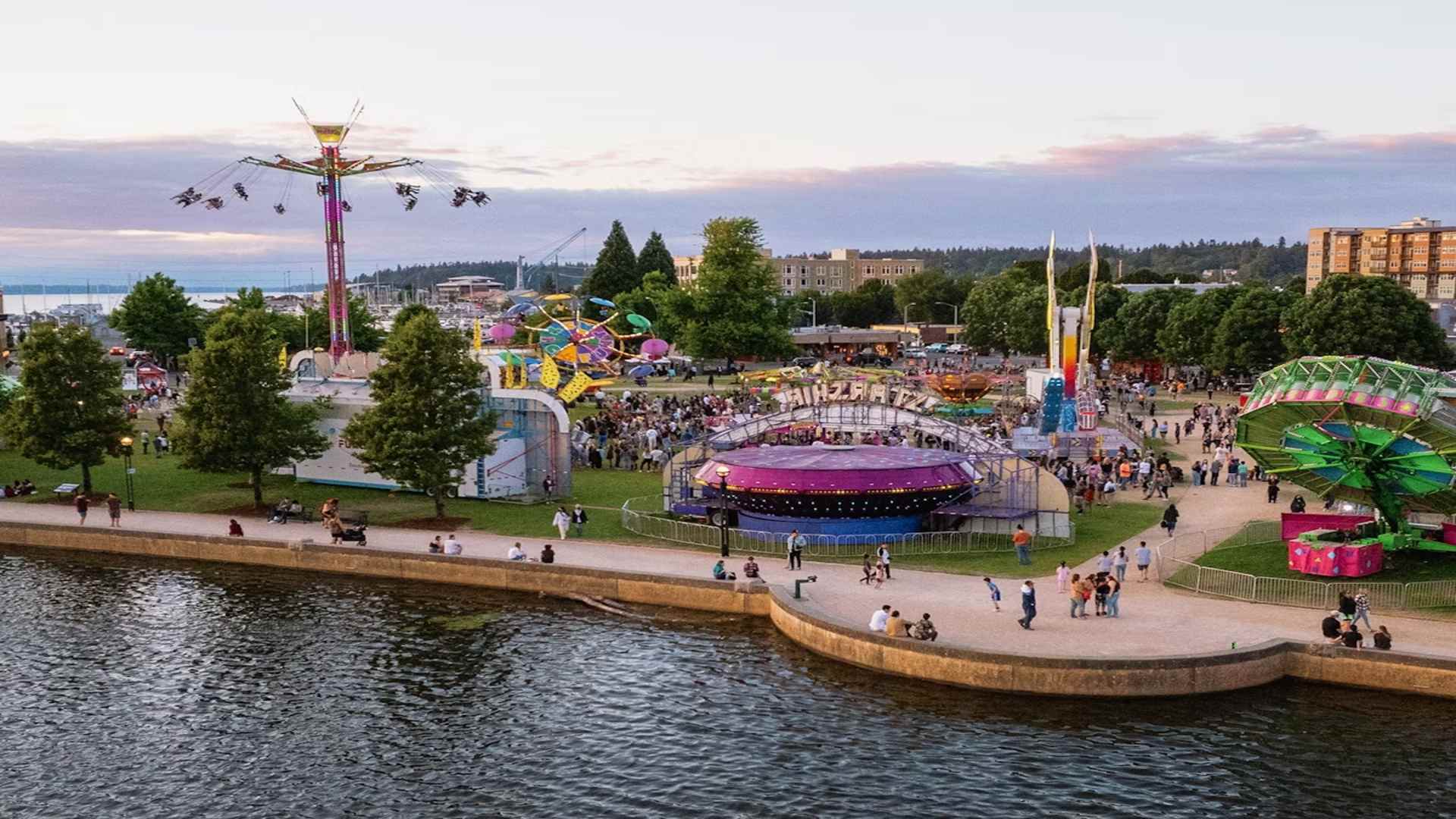
Olympia stands out as an attractive, historically rich city in the Pacific Northwest, and as the state capital of Washington, its charm is undeniable. The beauty of Puget Sound surrounds Olympia, and visitors enjoy its scenic views, the Washington State Capitol building, Farmers Markets, and the city’s plentiful art and culture. Travelers come for business and for pleasure to enjoy the many sights the Olympia region has to offer. The comfort and efficiency of arriving to Olympia is very important.
Compared to all other modes of transportation, rail travel is probably the best way to reach Olympia in the most picturesque way, and the most reliable way, and in the most comfortable way. Flying and Driving almost always involve long commutes and/or traffic, while setting a time schedule to avoid the stress of bad traffic is the main concern of train travel. The comfort of a train does ease the stress of travel.
The purpose of this guide is to show you everything about traveling to Olympia by train. We hope for this guide to be informative on everything you need to know for rail services in the region, popular American rail routes, pricing, stations, booking, how to travel Olympia by train for different seasons, and a detailed comparison of traveling to Olympia by train, bus, and car.
This guide will help you understand traveling to Olympia by train, from Seattle and Portland, to New York.
Why Take a Train to Olympia? Top Reasons to Choose Rail Travel
In the past few years, more and more travelers have been choosing to travel by train and for good reasons. Train travel offers conveniences and compromises for comfort and environmental responsibility that are unique to this travel option, if difficult to find, with other modes of travel. Here are some of the biggest reasons to take a train to Olympia.
1. Scenic Views :- The train ride to Olympia provides some of the best views the Pacific Northwest has to offer. Riding the Amtrak Cascades allows you to see dense evergreen forests, rivers, farmland, and jaw-dropping views of Puget Sound. You simply cannot see the views from the air or driving down below. Many travelers even say it is one of the best parts of the entire trip, so take your time!
2. Stress-Free Travel :- Traveling by train relieves so many stressors that come with driving. All the factors that come with arriving at an airport such as finding parking, waiting in line for security, and going through unfamiliar roads are nonexistent. You can settle into your chair and get comfortable while you pull out a book or even do some work while you take in the changing scenery.
3. City-Center Stations :- Train stations are typically cerca to city centers or more accessible neighborhoods than airports. That means, when you arrive, you have less transportation time and cost to get you to your next destination.
4. Eco-Friendly Option :- Rail travel can’t be beaten for environmental impact. Carbon emissions per passenger mile for trains are much lower than travel by car or by plane. Choose rail travel to reduce your environmental footprint in a practical way.
5. Comfortable Amenities :- Amtrak trains today have a great number of perks that make long trips much more reasonable. For example, these trains have reclinable chairs, generous legroom, large windows, and power outlets. Most of these trains even have WiFi! Depending on the train, there are even dining/cafe cars that serve meals and snacks.
6. Budget-Friendly :- Advance bookings for train travel tend to be cheaper than last-minute flight bookings, especially for short and medium trips, such as Seattle and Olympia, or Portland and Olympia. Along with no baggage fees (with limits) and no transfers to the airport, train travel is very cost efficient.
7. Flexibility for Work or Leisure :- Trains provide both the means and the environment to be productive, from the stable WiFi to the seating options with provisions for workspace (like classroom-style or meeting-room seating, tray tables, etc.). While the business community takes the time to answer emails, prepare presentations, or read, the leisure community finds the time to relax, socialize, and enjoy the view.
8. Fewer Restrictions Compared to Flying :- Unlike air travel, passengers book a more relaxed boarding experience with traveling by train. This is because the travel policy for boarding a train is more flexible and packs a larger volume of items. Passengers traveling via train can carry larger luggage without the strict restrictions.
| Reason | Benefit |
| Scenic Routes | Beautiful Pacific Northwest views |
| No Traffic Stress | Relaxed journey, no driving fatigue |
| Central Stations | Less commute time within the city |
| Eco-Friendly | Lower carbon emissions |
| Comfort | More legroom, WiFi, dining options |
| Affordable | Often cheaper with advance booking |
| Productivity | Work or relax during the journey |
| Fewer Restrictions | Easier packing and boarding process |
Which Trains Go to Olympia? Major Rail Services Explained
In the USA, Amtrak is the national passenger railroad corporation that provides almost all long-distance and regional train services. Knowing what Amtrak services are available to Olympia will help you to plan your trip more effectively.
Amtrak Cascades :- The major train service that connects Olympia to neighboring cities in the Pacific Northwest is the Amtrak Cascades service. The Cascades run from Eugene, Oregon to Vancouver, British Columbia, stopping in Portland, Olympia, Tacoma, Seattle, Everett, and Bellingham.
Because the Amtrak Cascades runs regularly, offers affordable prices, and has seen upgrades to its comfort, it is the favored choice of many commuters in the area, as well as providing service to short-distance leisure travelers and students. The trains offer Coach and Business Class, and also feature a cafe car. The cafe car sells snacks, drinks, and sandwiches on the train.
Amtrak Coast Starlight :- For long-distance travelers coming from further away, like from California, the long-distance rail service that you would use is the Amtrak Coast Starlight. This service starts in Los Angeles and ends in Seattle with a staggering 1,300+ mile opening through California, Oregon, and Washington. Even though Coast Starlight does not reach Olympia-Lacey Station, travelers can connect through Seattle or Tacoma to reach Olympia on the Cascades service or a Thruway connection.
Some other features that the Coast Starlight offers are sleeper cars and a dining option on board. These features along with the stunning views that travelers get of the coastline make it a favorite amongst travelers.
Connecting Bus Services :- Amtrak runs Thruway bus connections for specific instances, especially for travelers coming from regions with no rail service. These buses function as part of Amtrak’s ticketing system and supply first and last mile connectivity from train stations to bus terminals and to destinations such as Olympia.
Long-Distance National Routes :- Travelers from the East Coast or Midwest can board long-distance Amtrak trains such as the Empire Builder (Chicago to Seattle) to connect to the Pacific Northwest network. From there, they can travel to Olympia via Seattle.
| Train Service | Route Coverage | Best For |
| Amtrak Cascades | Eugene-Portland-Seattle-Olympia-Vancouver | Regional & short trips |
| Amtrak Coast Starlight | Los Angeles-Seattle (via Olympia area) | Long-distance scenic travel |
| Amtrak Empire Builder | Chicago-Seattle (connects onward to Olympia) | Cross-country travelers |
| Amtrak Thruway Bus | Connects nearby stations to Olympia | Last-mile connectivity |
Popular Train Routes to Olympia From Major US Cities
Because Olympia is an Amtrak Cascades station, Olympia is very well connected to a number of large westerly cities. Popular destinations, distances, and travel times are described below.
| From City | Approx Distance | Approx Travel Time | Suggested Service |
| Seattle, WA | ~60 miles | 1.5-2 hours | Amtrak Cascades |
| Tacoma, WA | ~30 miles | 45 minutes-1 hour | Amtrak Cascades |
| Portland, OR | ~115 miles | 3-3.5 hours | Amtrak Cascades |
| Eugene, OR | ~250 miles | 6-7 hours | Amtrak Cascades |
| Los Angeles, CA | ~1,200 miles | 28-30 hours | Coast Starlight (with connection) |
| Sacramento, CA | ~700 miles | 18-20 hours | Coast Starlight (with connection) |
| San Francisco (Emeryville), CA | ~750 miles | 19-21 hours | Coast Starlight (with connection) |
| Vancouver, BC | ~170 miles | 4.5-5 hours | Amtrak Cascades |
| Chicago, IL | ~2,100 miles | 48-55 hours | Empire Builder (with connection) |
| New York, NY | ~2,800 miles | 65-72 hours (with connections) | Multiple connections |
Note: Exact schedules and durations can vary due to seasonal changes, maintenance work, and weather conditions, particularly during winter months in the mountainous sections of these routes. Always check the latest schedule on Amtrak’s official website or app before finalizing your travel plans.
Why Distance Doesn’t Always Equal Time
Train travel time is not always proportional to the distance covered. A train route through a region with many stations and crowds (like the Cascades) will take longer on average to travel a mile. In contrast, routes through sparsely populated, long distance, and open terrain will be able to stop less, and cover ground more efficiently. This information will help you estimate your time of arrival and plan your travel more efficiently.
NYC to Olympia Train: Schedule, Duration & Ticket Tips
Travelers on the East Coast, and especially in New York City, have to put in a lot of effort to reach Olympia by train. However, the effort is well worth it since a long train ride is an enjoyable experience to many.
No train line goes directly from New York City to Olympia so a series of trains must be used. The journey spans the majority of the continent and typically requires 1 to 2 transfers.
Typical Route
- New York (Penn Station) to Chicago – via the Lake Shore Limited or Capitol Limited service
- Chicago to Seattle – via the Empire Builder service, which travels through the northern United States including Minnesota, North Dakota, Montana, and Idaho before reaching Washington State
- Seattle to Olympia – via Amtrak Cascades or a connecting Thruway bus
Estimated Duration
The length of travel time from West to East is approximately 65-75 hours counting delays in Chicago and Seattle, possible seasonal delays, and connection wait times. You can expect to travel for about 3 days.
What to Expect Along the Way
This segement of the Lake Shore Limited takes you through beautiful parts of upstate NY, of the great lakes, and through to Chicago. The next leg, the Empire Builder, is considered to be one of the most beautiful long distance options by Amtrak passengers, going through Glacier National Park, and is a big selling point for many people deciding to book this trip.
Ticket Tips
- Advance Booking: Book at least 1-2 months ahead for better fares, as long-distance routes tend to fill up quickly during peak travel seasons.
- Overnight Stops: If possible, break your journey with an overnight stay in Chicago or Seattle to reduce fatigue and explore these cities along the way.
- Sleeper Cars: For long journeys spanning multiple nights, a sleeper car can be a worthwhile investment, offering a private cabin, bedding, and included meals – making the journey far more restful.
- Flexible Dates: Mid-week travel is often cheaper than weekend travel, and using flexible date search tools can help you find the most affordable options.
- Pack Essentials: For a multi-day journey, pack a small bag with essentials (toiletries, a change of clothes, chargers) separately from your main luggage for easy access during the trip.
- Check Connection Buffer Times: When booking connecting segments, ensure there’s enough buffer time between trains in Chicago and Seattle to avoid missing your connection due to delays.
| Segment | Approx Duration |
| NYC to Chicago | ~19-20 hours |
| Layover in Chicago | Variable (a few hours to overnight) |
| Chicago to Seattle | ~46 hours |
| Layover in Seattle | Variable (a few hours to overnight) |
| Seattle to Olympia | ~1.5-2 hours |
| Total Estimated Time | 65-72 hours (with layover) |
Olympia Train Travel Tips for First-Time Passengers
A first train trip always comes with anticipation and excitement especially to a place like Olympia. It always helps to prepare. Servicing several aspects of travel can help improve your experience. Here is a list of things to keep in mind when preparing.
- Arrive at the Station Early: If you have a checked bag or you’re traveling during a peak time, arrive at least 30-45 minutes early to the station.
- Carry Valid ID: As it may be requested at the time of boarding, especially on longer routes, always keep a valid government-issued photo ID with you.
- Understand Luggage Limits: Amtrak’s policy per passenger allows two carry-on bags and two checked bags, and one of the biggest perks of a long-distance train journey is the generous luggage policy. Checked bags must weigh no more than 50 pounds, and there is limited size policy, so consult the terms of your specific ticket for specifics. Smaller stations may offer limited luggage handling services.
- Choose Your Seat Wisely: Enjoying lovely views with a window seat is a must on Pacific Northwest flights, especially where you get the best views of the forests, rivers, and Puget Sound. For a view of the landscape, an aisle seat makes is better for access to restrooms and stretching your legs.
- Pack Food & Water: Bring your own snacks. Meals and beverages can be purchased from the café or dining car on longer routes. Bring a refillable water bottle.
- Bring Charging Devices: Power outlets can be found at or near most seats at modern Amtrak trains so take your charger and your adapters.
- Download Tickets in Advance: Storing your e-ticket in the Amtrak mobile application eliminates the hassles of both losing a paper ticket as well as a ticket requiring print out.
- Check the Weather: The Pacific Northwest has unpredictable weather and frequent rain that lasts throughout the year. Because of this, it is smart to have layered clothing and a light rain jacket on you, no matter what season it is.
- Be Mindful of Quiet Cars: Most Amtrak trains have designated quiet cars. Quiet cars are ideal if you want to work or even get some rest without the disruption of loud conversations and phone calls.
- Know Your Station Stop: Because some routes have multiple stops that are very close to each other, you may utilize the Amtrak app’s real-time tracking function, or pay close attention to the station announcements to know when to get off at the Olympia-Lacey Station.
- Bring Entertainment: Download entertainment for the journey because the WiFi on the bus is limited.
- Consider Travel Insurance for Long Trips:When planning a multi-day cross-country trip, it’s very possible that multiple connections will be required. During these cross-country trips, having travel insurance can provide some assurance if connections are missed or delays occur.
Direct and Connecting Train Routes to Olympia
To create an effective itinerary to Olympia, it is necessary to comprehend the direct and connecting transport routes.
The train station in Olympia, known as the Olympia-Lacey Station, sits in the Lacey region, 7 to 8 miles away from downtown, and outside of the center of the city.
Direct Routes :- Amtrak Cascades provides direct rail service between Olympia-Lacey Station and Seattle, Tacoma, Portland, and Eugene. Rail service from Olympia-Lacey Station is the most convenient travel option for regional service from the Pacific Northwest.
Connecting Routes :- Most long-distance travelers will have to fly to Seattle or Portland and then connect to Amtrak Cascades or the Thruway bus for Olympia. This captures travelers from the East Coast, Midwest, and Southern California. These connections add a step to the journey, but in general, this is good practice, and tickets can often be purchased for multiple connections in a single itinerary.
Tips for Managing Connections
- Allow Buffer Time: When booking connecting tickets, choose itineraries with at least 45-60 minutes of buffer time between trains to account for potential delays.
- Track Your Connecting Train: Use the Amtrak app to monitor real-time status updates for both your inbound and outbound trains.
- Ask Station Staff for Help: If you’re unfamiliar with a connecting station like Seattle’s King Street Station, station staff can help direct you to the correct platform for your onward journey.
| Route Type | Example | Connection Needed? |
| Direct | Seattle to Olympia | No |
| Direct | Portland to Olympia | No |
| Direct | Tacoma to Olympia | No |
| Connecting | Los Angeles to Olympia | Yes (via Seattle) |
| Connecting | Sacramento to Olympia | Yes (via Seattle) |
| Connecting | New York to Olympia | Yes (via Chicago & Seattle) |
| Connecting | Chicago to Olympia | Yes (via Seattle) |
Business Class vs Coach on Olympia Trains
On the Amtrak Cascades, customers generally may choose from two classes: Coach and Business. Knowing the differences can help you choose the option that best meets your needs in affordability and comfort.
Coach Class :- Seats in Coach Class are what you will find on every Amtrak Cascades service. Reclined seats with legroom and space for a tray table are features of Coach Class seats. The cost of Coach Class makes it a good option for travelers on a short duration train service that doesn’t prioritize added on features.
Business Class :- Business Class offers a noticeably nicer experience with a larger seat that has a larger seat and more legroom, and extra quiet with a free non alcoholic drink and priority boarding. Business Class is a large expense, but is worth it for people flying longer routes along the Cascades.
| Feature | Coach Class | Business Class |
| Seat Width | Standard | Wider, more legroom |
| Price | More affordable | Premium pricing |
| Power Outlets | Available | Available (priority) |
| Complimentary Drinks | No | Yes, often included |
| Quiet Car Option | Available | Available |
| Priority Boarding | No | Yes |
| Seat Recline | Standard | Enhanced |
| Best For | Budget travelers, short trips | Comfort seekers, business travelers |
Suggestion:Traveling a short distance (like Seattle to Olympia) makes including Coach Class on your ticket a comfortable and economical option. Travel these same longer routes (like Eugene to Olympia) or if you’re looking for a bit more comfort, a more favorable price difference can be found in Business Class.
Olympia Train Station: Everything You Need to Know About Olympia-Lacey Station
Understanding the station itself – its location, facilities, and surrounding transportation options – is key to planning a smooth arrival or departure.
Station Name: Olympia-Lacey Station
Location: 6600 Yelm Hwy SE, Lacey, WA – approximately 7-8 miles from downtown Olympia.
Key Facts
| Detail | Information |
| Station Type | Amtrak Cascades stop |
| Parking | Free parking available |
| Accessibility | Wheelchair accessible |
| Ticket Counter | Limited staffed hours, self-service kiosks available |
| Nearby Transport | Local bus services and taxi/rideshare available |
| Waiting Area | Indoor waiting room with seating |
| Restrooms | Available on-site |
| Vending Machines | Available for snacks and drinks |
Getting to City Center
Since Olympia-Lacey Station is located outside the immediate downtown area, you’ll need additional transportation to reach the city center. Options include:
- Intercity Transit Bus: A local public bus service connects the station to downtown Olympia at an affordable fare.
- Taxi or Rideshare: Uber and Lyft are readily available near the station, with an approximate travel time of 15-20 minutes to downtown.
- Rental Car: Some travelers opt to rent a car upon arrival for greater flexibility during their stay, particularly if they plan to explore areas beyond downtown Olympia.
Facilities :- The station provides basic but functional facilities such as restrooms, indoors seating, and vending machines for light snacks and drinks. There are baggage carts as well.
Safety and Accessibility :- Ramps and accessible waiting area seating means Olympia-Lacey Station performance hall is accessible for wheelchair users. The station is illuminated well and is considered safe, but it is a good practice to keep your belongings close and to remain situationally aware, especially during the early hours or during the later hours.
How to Book Train Tickets to Olympia: Step-by-Step Guide
Booking train tickets is easy if you follow these steps:
Step 1: Decide Your Travel Dates
Finalize your travel dates and try to stay flexible for better deals. If your schedule allows, consider adjusting your departure by a day or two to take advantage of lower fares.
Step 2: Visit Official Booking Platform
Go to Amtrak’s official website or download the official mobile app. Booking directly through Amtrak ensures you have access to the most accurate schedules, fare options, and any applicable promotions.
Step 3: Enter Route Details
Enter your “From” station (your starting city) and “To” station (“Olympia-Lacey”). Double-check that you’ve selected the correct station, especially if your starting city has multiple Amtrak stops.
Step 4: Compare Schedules & Fares
Compare available trains, timings, and fares. Check both direct and connecting options, and pay attention to total journey time, not just price, particularly for long-distance routes.
Step 5: Select Class
Choose Coach or Business Class based on your preference and budget. For long-distance connecting journeys, also consider whether a sleeper accommodation makes sense for your comfort.
Step 6: Add Passenger Details
Fill in all passenger details accurately, including any applicable discounts (senior, student, military, etc.). Errors in passenger details can occasionally cause issues at boarding, so double-check names and ages before submitting.
Step 7: Choose Seat (If Available)
Some routes offer seat selection – you can choose window or aisle, and in some cases, even select a specific row for added comfort.
Step 8: Make Payment
Complete the payment through the secure payment gateway. Amtrak accepts major credit cards, debit cards, and in some cases, third-party payment services.
Step 9: Save Your E-Ticket
Save the confirmation email/SMS and download the ticket in the mobile app for easy access during boarding. Having a digital copy reduces the risk of losing a paper ticket.
Step 10: Arrive Early
Reach the station before departure for boarding, allowing extra time for parking, baggage check, and any unforeseen delays.
| Booking Step | Action |
| 1 | Choose travel dates |
| 2 | Visit official site/app |
| 3 | Enter from/to stations |
| 4 | Compare fares & schedules |
| 5 | Select class |
| 6 | Fill passenger info |
| 7 | Choose seat |
| 8 | Make payment |
| 9 | Save e-ticket |
| 10 | Reach station early |
Booking Through Third-Party Platforms :- Booking directly through Amtrak is usually the best option for accurate and easily changeable bookings. However, some travelers prefer using travel booking apps that consolidate trains, buses, and flights. Verify that they list the official Amtrak prices and times and that the app is trustworthy.
Olympia Train Ticket Price: How Much Does It Cost & How to Save Money
The price of train tickets (across a range of countries) is affected by distance, class, booking time, demand and the season. Knowing these variables is more likely to help you budget and find deals.
Approximate Price Range
| Route | Approx Coach Price | Approx Business Price |
| Seattle to Olympia | $15 – $30 | $30 – $50 |
| Tacoma to Olympia | $10 – $20 | $20 – $35 |
| Portland to Olympia | $30 – $55 | $55 – $85 |
| Eugene to Olympia | $45 – $70 | $80 – $120 |
| Los Angeles to Olympia (connecting) | $150 – $300+ | $250 – $450+ |
| Sacramento to Olympia (connecting) | $120 – $250+ | $220 – $400+ |
| Chicago to Olympia (connecting) | $200 – $380+ | $350 – $600+ |
| New York to Olympia (connecting) | $250 – $450+ | $400 – $700+ |
Factors That Influence Ticket Prices
- Booking Lead Time: Tickets booked further in advance are generally cheaper, as fares tend to rise closer to the departure date due to demand-based pricing.
- Day of Travel: Weekday travel, particularly Tuesday through Thursday, tends to be cheaper than weekend departures.
- Season: Summer months and major holidays see higher demand and correspondingly higher prices.
- Class of Service: Business Class naturally costs more than Coach due to added amenities.
- Route Length: Longer, multi-segment journeys involving connections cost significantly more than short regional hops.
Tips to Save Money
- Book in Advance: The earlier you book, the better the chance of getting a good fare, particularly for popular travel dates.
- Travel Midweek: Tuesday-Thursday travel is generally cheaper than weekends.
- Off-Peak Season: Avoid summer and major holiday periods by traveling during fall or winter months for lower fares.
- Check Discounts: Special discounts are available for senior citizens, students, military personnel, and AAA members – always check eligibility before booking.
- Amtrak Guest Rewards: Join the loyalty program to earn points on every trip, which can later be redeemed for free or discounted travel.
- Group Booking: If traveling with multiple passengers, check for group discounts, which can offer meaningful savings for families or larger groups.
- Flexible Date Search: Use the “flexible dates” feature on the booking platform to compare prices across several days and find the cheapest option.
- Watch for Promotions: Amtrak periodically runs seasonal sales and promotional fares – signing up for their newsletter can help you stay informed.
- Avoid Last-Minute Bookings: Last-minute fares are almost always the most expensive, particularly for long-distance connecting routes.
Best Time to Visit Olympia by Train: Seasonal Travel Tips
The best time to visit Olympia depends on your preferences – weather, crowds, and budget all play a role in determining the ideal travel window.
| Season | Weather | Crowd Level | Ticket Prices | Recommendation |
| Spring (Mar-May) | Mild, blooming flowers | Moderate | Moderate | Great for sightseeing |
| Summer (Jun-Aug) | Warm, sunny | High | Higher | Best weather, but book early |
| Fall (Sep-Nov) | Cool, colorful foliage | Low-Moderate | Moderate | Scenic train views |
| Winter (Dec-Feb) | Cold, rainy | Low | Lower | Budget travel, fewer crowds |
Spring :- The annual blooming surrounding the Capitol Campus and parks is reason enough to organize a trip to Olympia in the Spring as the mild weather combined with the blooming gardens and scattering other sights makes for a picturesque experience. This season also makes for a good travel time, as ticket prices are cheaper than usual and crowds are reasonable.
Summer :- With some of the best weather Capitol Lake has to offer (sunny & warm), it is a prime season for many outdoor activities. This includes going to nearby beaches and farmers markets. This weather also brings in tourists so seats and fares require advance booking.
Fall :- Fall may be one of the most underrated seasons to travel in, as even the temperature along the train route drops to cool and pleasant levels, and the beautiful autumn leaves make for great sights. After the busy summer season, the crowds also thin out. Prices are also more affordable during this season.
Winter :- The Pacific Northwest rain sets in during winter months in Olympia, and it gets cold. Travelers usually see a drop in price due to a decrease in sales. If the chill and rain doesn’t bother you, winter is a great time to travel. It will also be a lot more quiet.
Best Overall Time: Late spring through early fall (May to September) is considered best for pleasant weather and outdoor activities. However, if you’re budget-conscious and want to avoid crowds, fall or winter is also a great option, particularly for travelers who prioritize cost savings over ideal weather conditions.
Train vs Bus vs Car to Olympia: Which Is the Best Way to Travel?
Each travel mode has its own pros and cons. Below is a comprehensive comparison to help you decide which option best fits your specific travel needs.
| Factor | Train | Bus | Car |
| Comfort | High | Moderate | Depends on driver |
| Cost | Moderate | Low | Variable (fuel + tolls) |
| Travel Time | Moderate-Long | Long | Flexible |
| Scenic Views | Excellent | Limited | Good (self-paced) |
| Convenience | High (central stations) | Moderate | High (door-to-door) |
| Stress Level | Low | Moderate | High (traffic, parking) |
| Eco-Friendliness | High | High | Low |
| Flexibility | Fixed schedule | Fixed schedule | Fully flexible |
Summary
- Train: Best for comfort, scenic views, and stress-free long-distance travel.
- Bus: Best for budget travelers who want to minimize cost.
- Car: Best for flexibility and if you want a road trip with multiple stops.
Overall, if comfort and convenience are your priority, train is the most balanced option for traveling to Olympia.
Cost Breakdown: Train vs Bus vs Car
Consider a realistic example of the cost for traveling between Seattle and Olympia for all three modes of transportation. You will be able to weigh the various options and decide which mode of transportation suits your travel circumstance the best.
| Cost Factor | Train | Bus | Car (Solo Driver) |
| Base Ticket/Fuel Cost | $15 – $30 | $10 – $20 | $8 – $12 (fuel only) |
| Parking Cost | Free (at station) | N/A | $5 – $15 (destination parking) |
| Tolls (if any) | N/A | N/A | $0 – $5 |
| Time Value (opportunity cost) | Low (can work/relax) | Moderate | High (full attention needed) |
| Total Approx Cost (1 person) | $15 – $30 | $10 – $20 | $13 – $32 |
| Total Approx Cost (Family of 4) | $60 – $120 | $40 – $80 | $13 – $32 (same car cost) |
This table is pretty interesting; from the looks of it, traveling solo means the bus is your best option, but if you are traveling with family, or a larger group, the car becomes the better option because the gas cost gets split per person. With train and bus travel, each group member must buy a ticket, which also drives up the cost. The car remains the better option if you can handle the traffic and driving stress.
Time Efficiency Comparison
The factor of time is very relevant in the case of choosing a mode of travel. The table below shows an estimated time investment by scenario and accounts for traffic and weather effects.
| Scenario | Train | Bus | Car |
| Seattle to Olympia (door-to-door) | ~2.5 hours (incl. local transport) | ~2 hours | ~1 hour 15 minutes |
| Portland to Olympia (door-to-door) | ~4 hours | ~3.5 hours | ~2 hours 30 minutes |
| Traffic Impact | Minimal (fixed schedule) | Moderate (subject to traffic) | High (rush hour delays common) |
| Weather Impact | Low | Moderate | High (rain/snow can slow travel) |
Looking at specific short trips, driving may be the fastest option, especially in the absence of traffic. However, the unpredictable weather of the Pacific Northwest means the Rain and Fog can significantly increase travel times driving in the winter. The train is the more reliable option in this scenario. The train runs, on a schedule, and weather affects the train, and travel time, far less than travel by road.
Which Option Suits Which Traveler?
Because every traveler has different things that they need, the “best” thing is entirely based on what the individuals’ priorities are. Here is a guide to the travel style and a transportation option:
| Traveler Type | Recommended Mode | Why |
| Solo Business Traveler | Train | Can work while traveling, WiFi & power outlets available |
| Budget Backpacker | Bus | Lowest cost, especially with advance booking |
| Family with Kids | Car | Flexibility, multiple stops, can carry luggage comfortably |
| Senior Citizens | Train | Comfortable seating, less physical strain, discounts available |
| Group of Friends (Road Trip Vibe) | Car | Cost-sharing and freedom to explore nearby attractions |
| Tourist Wanting Scenic Experience | Train | Best views, relaxed pace, no driving stress |
| Last-Minute Traveler | Bus | Generally easier and cheaper to book on short notice |
| Traveler with Heavy Luggage | Car | Easier loading/unloading without baggage limits |
| Pet Owner | Car | Most flexibility for traveling with pets |
Environmental Impact: A Closer Look
Another consideration people are taking into account when traveling is the impact on the environment. Typically, traveling by bus or train (both forms of public transportation) is better for your carbon footprint than a car, since there are multiple passengers decreasing per-person emissions.
| Mode | Approx CO2 Emissions per Passenger (Seattle-Olympia) | Environmental Rating |
| Train | Low | Excellent |
| Bus | Low-Moderate | Good |
| Car (Solo) | High | Poor |
| Car (Carpooled, 4 people) | Moderate (per person low) | Good |
If you care about the environment when traveling, you should consider taking a train, or carpooling if you’re traveling by car. Traveling by car alone creates the most emissions by a large margin compared to all other means of travel, which is why carpooling and using public transport is the best choice if you want to minimize your environmental footprint.
Comfort and Convenience Deep Dive
Travel satisfaction involves evaluating comfort beyond time and cost. Considering all three transport modes, seating on trains is the most spacious and relaxed. Passengers are allowed to stand up, walk the aisles, visit the cafe car, and stretch their legs. Passengers on buses and cars don’t have that luxury. Buses are the most economical transport mode but often have old, limited legroom vehicles with few amenities. Cars are the best mode for total personal selection of comfort settings (temperature, music, seating position) but demands total concentration and attention of the driver for the entire length of the exhausting journey.
Frequently Asked Questions
1. Does Olympia have a direct train station?
Yes, Olympia is served by Olympia-Lacey Station, about 7-8 miles from downtown, with direct Amtrak service to Seattle, Tacoma, and Portland.
2. How long does it take to travel from Seattle to Olympia by train?
The journey takes about 1.5-2 hours, depending on the train schedule.
3. Is there a direct train from New York to Olympia?
No. You’ll need connections, usually through Chicago and Seattle, with a total travel time of around 65-75 hours.
4. How far in advance should I book an Olympia train ticket?
Book 1-2 months in advance for the best fares, especially during peak travel seasons.
5. Is parking available at Olympia-Lacey station?
Yes, the station offers free passenger parking.
6. What’s the difference between Coach and Business Class?
Business Class includes extra legroom, complimentary drinks, and priority boarding, while Coach offers standard seating at a lower price.
7. Are discounts available for senior citizens?
Yes, discounts are available for seniors, students, military personnel, and some AAA members.
8. How far is Olympia train station from the city center?
The station is about 7-8 miles from downtown and is accessible by bus, taxi, or rideshare.
9. Are WiFi and charging ports available on the train?
Yes, most Amtrak trains provide WiFi and power outlets.
10. What’s the best season to visit Olympia?
May to September offers the best weather, while winter is ideal for lower prices.