
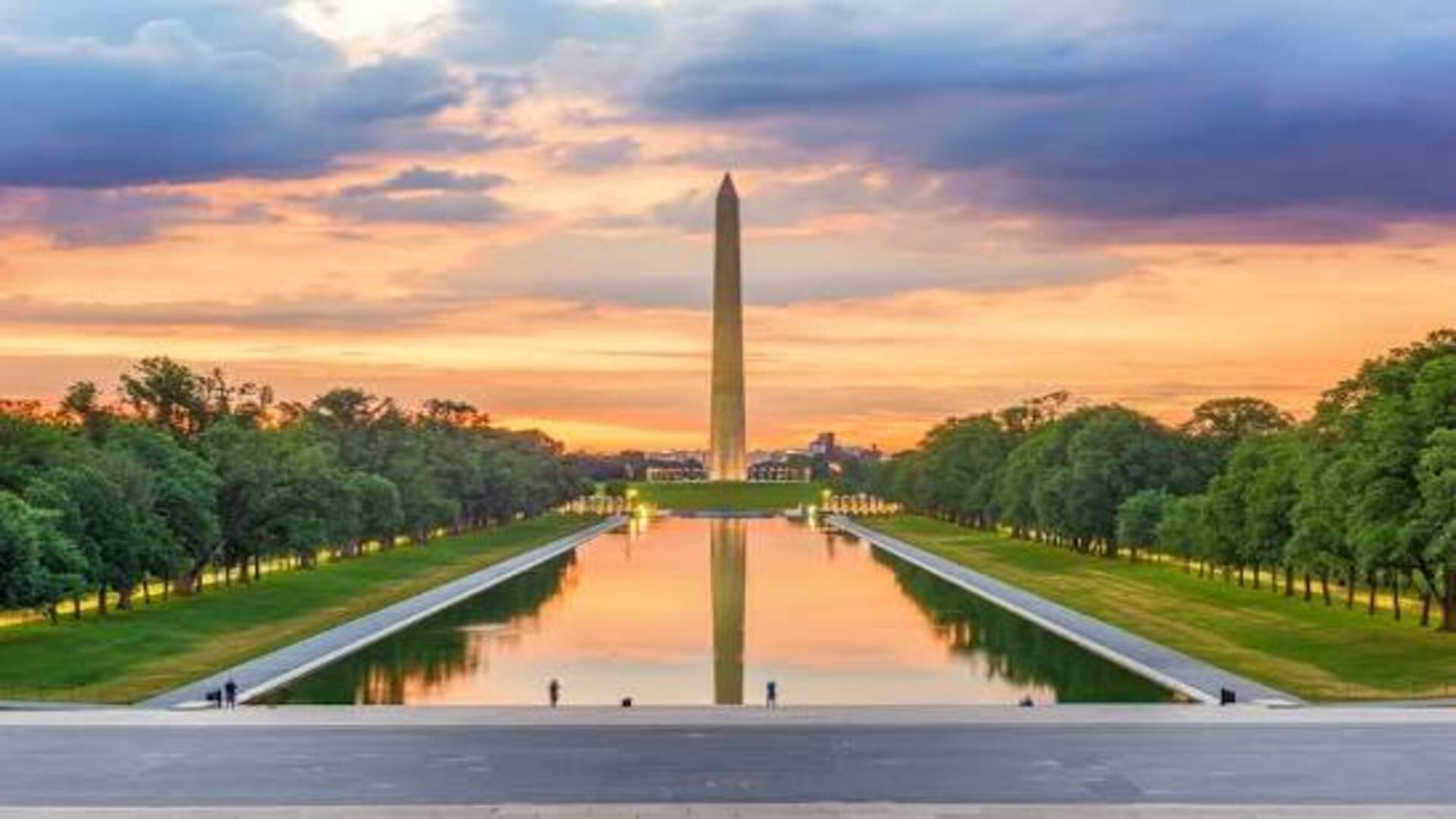
The Boston to Washington, D.C. line is run by Amtrak on the Northeast Corridor. The Acela takes between 6.5 and 7 hours. The Regional takes between 8 and 8.5 hours. Prices for the Regional start around $60 or $70, and prices for the Acela start around $120. Prices for all tickets are dependent on when you book them. Make sure to check Amtrak.com for any changes.
There are sites to see along the 440-mile route, like Providence, New Haven, New York City, Philadelphia, Baltimore, and Washington, D.C., plus there’s no traffic, no long airport security lines, or expensive parking to pay for. This guide lists all of your options for this route, and the options if you need to change trains in Albany.
Why Take a Train from Boston to Washington, D.C.? Top Reasons to Choose Rail Travel
Traveling by rail on the Northeast Corridor is efficient and provides a variety of additional benefits. These benefits include, but are not limited to:
- Traveling to city centers. South Station and Union Station are both centrally located and accessible via subway and bus connections.
- Avoiding roadway congestion. Travelers can read, work or sleep as opposed to sitting in traffic along the congested I-95 corridor.
- More comfortable seating. Travelers have more legroom, and seating is wider as opposed to airline seating.
- Free Wi-Fi. Amtrak provides Wi-Fi on the Northeast Corridor, and it allows customers to do light surfing.
- More generous baggage rules. Customers are allowed to check more bags and carry on more bags for free as opposed to flying.
- More reliable. Trains run even when flights are canceled due to weather.
- Less carbon footprint. Rail emits less carbon per passenger than flying or driving.
- Pretty scenery. Trains follow the shoreline of Connecticut and Rhode Island and the Chesapeake region and the Delaware Valley.
- Flexibility. Many fares are fully refundable.
Using time productively. The length of the trip allows travelers to be productive and arrive at their destination rested.
Which Trains Go from Boston to Washington, D.C.? Major Rail Services Explained
Amtrak has a monopoly on intercity rail service along this route. Two of Amtrak’s services handle this section of the corridor.
Acela. Acela is Amtrak’s high-speed, intercity, premium service. Acela trains have fewer stops and faster times than the Northeast Regional service. The onboard Acela experience can vary by departure based on the trainset (series of railcars) that’s assigned to that particular trip. Acela offers Business Class and First Class; no Coach class seating is available on Acela.
Northeast Regional. The Northeast Regional service has more stops and lower fares than Acela. The Northeast Regional service offers Coach and Business Class seating. Most Regional trains between Boston and Washington, D.C. keep the same seat throughout, meaning you won’t have to make a connection.
| Feature | Acela | Northeast Regional |
| Typical Boston to DC time | About 6.5 to 7 hours | About 8 to 8.5 hours |
| Number of stops | Fewer | More |
| Seat classes | Business, First | Coach, Business |
| Typical starting fare | Higher | Lower |
| Daily departures | Fewer | More |
| Wi-Fi and outlets | Yes | Yes |
| Best for | Time-sensitive travelers | Budget-focused travelers |
Both services depart from Boston South Station. Other services also stop at Back Bay Station. This is useful if you are staying in Back Bay, Fenway or if you are near Copley Square.
Popular Train Routes from Boston to Washington, D.C. from Major US Cities
Many travelers connect from Washington to Boston because this section connects to many of the largest cities on the East Coast. Many travelers either take the entire route or board and get off at stops along the way.
| Route | Approx. Regional Time | Approx. Acela Time |
| Boston to Providence | 1 hour 10 to 20 minutes | About 1 hour |
| Boston to New Haven | About 2.5 to 3 hours | About 2 to 2.5 hours |
| Boston to New York City | About 4.25 to 4.5 hours | About 3.5 to 4 hours |
| Boston to Philadelphia | About 5.5 to 6 hours | About 5 hours |
| Boston to Baltimore | About 7.5 hours | About 6 hours |
| New York City to Washington, D.C. | About 3.25 to 3.75 hours | About 2.75 to 3 hours |
| Philadelphia to Washington, D.C. | About 2 to 2.25 hours | About 1.75 hours |
Another route on the same corridor is New York to Philadelphia and then Philadelphia to Baltimore. Because the route is continuous, you can travel on your own schedule and stay in New York or Philadelphia for the night on your way to your final destination. It is also a great way to get a long weekend trip if that’s what you’re looking for.
NYC Train from Boston to Washington, D.C.: Schedule, Duration and Ticket Tips
New York City is the midway point on this journey. Many trains stop at New York’s Penn Station, which is about halfway on this route. Several travelers opt to ride straight through. Others stop in New York for a night.
Normal times. Expect the train to take 3.5 to 4.5 hours to get from Boston to New York. It takes 2.75 to 3.75 hours to get from New York to Washington. Generally, there is a few-minute stop at Penn Station.
Normal patterns. Trains run throughout the day, and there are more during the week than on the weekend. The earliest trains out of Boston are in the early morning, and the last ones leave in the evening. There is track work done, which affects schedules. Usually the work is in the spring and during the school year. During these times, the schedules can change and affect when connections can be made.
| Ticket Tip | Why It Helps |
| Book early | Lowest fares sell out first, especially on weekends and holidays |
| Travel mid-day or mid-week | Fares are usually lower than during peak commute hours |
| Compare Regional and Acela | The price gap can be large, while the time saved may be one to two hours |
| Check the app | Digital tickets and live gate updates reduce stress |
| Arrive 20 to 30 minutes early | Allows time to find the gate and board before departure |
| Consider a split journey | Buying Boston to New York and New York to DC separately can sometimes cost less, though this is not guaranteed |
At New York Penn Station, gates are announced to open only a few minutes before departure. Make sure to stay near the departure boards and don’t stray too far from the waiting area. If you plan to remain in New York, you can usually get off and on later trains, but this may require the purchase of individual tickets for each segment.
Albany Train Travel Tips for First-Time Passengers
A number of travelers who search for the Boston to Washington route see Albany options. Albany is not on the direct route from Boston to Washington. Albany is, however, on the connecting route, as the Boston-Albany service continues to Chicago, and Albany then connects to New York on the Empire Service line. Here are some tips if this is the routing you are considering.
- You should book your seating reservations in advance. Long-distance trains such as the Lake Shore Limited have limited services and may only have one departure per day in each direction.
- You should allow additional time for connections, as a delay on the first leg may cause you to miss your connection on the second leg. Booking everything on the same ticket increases the chances that Amtrak will help you with your rebooking.
- Double-check the name of the station, as Albany is officially called Albany-Rensselaer and is on the east side of the Hudson River, away from downtown.
- Consider bringing snacks and water, as the café car may not be available or have what you want on the service you’re taking.
- Make sure your devices are charged before you get on. Although there may be available outlets, some may not be working.
- Pack light. Some trains do not have adequate space for all of the carry-ons, and the overhead racks may not have space for all carry-ons.
- Download your ticket and save it offline. Cell service may not be available for all of the more rural areas of the route.
- Sit on the appropriate side for scenery. The Empire Service has some nice views of the Hudson River.
The most important rule for first-time riders is to arrive early. Have your ticket ready. Amtrak staff are very friendly and will help you with your question about which platform or train.
Direct and Connecting Train Routes from Boston to Washington, D.C.
The journey has two main routes.
Option 1: Northeast Corridor (recommended). This is the normal way of doing things. Northeast Regional and Acela trains run from Boston South Station to Washington Union Station on the same train. Some Regional departures require no change of trains, while others operate as part of a through train to Virginia. The through train to Virginia may require you to change at Washington, but you would stay on board for the Virginian section of the train. The whole way, you remain on board the train.
Option 2: Albany Connection. You take a train from Boston to Albany-Rensselaer and then connect to the Empire Service to New York Penn Station to continue to Washington on the Northeast Corridor. This route is much longer and takes around 10 hours or more, with at least two changes. This route probably does not make sense for most travelers, but this may be good for someone who wants to stop in Albany or the Hudson Valley.
| Factor | Direct Corridor | Via Albany |
| Total travel time | About 6.5 to 8.5 hours | Often 10 or more hours |
| Number of transfers | None on most trains | At least two |
| Frequency | Many daily trains | Limited, especially Boston to Albany |
| Complexity | Simple | Moderate to high |
| Best for | Almost everyone | Sightseers adding Albany |
Pick the direct corridor unless you want to stop in Albany. The direct corridor is faster, easier and has way more departure options.
Business Class vs Coach on Albany Trains
Seat classes are always important on Amtrak, including on the Albany routes. On the Empire Service between New York and Albany and on the Northeast Regional service, you usually can choose between Coach and Business Class. Acela offers only Business Class and First Class.
| Feature | Coach | Business Class |
| Seat size | Standard Amtrak seat | Roomier seat with extra legroom |
| Seating arrangement | Open seating or assigned, depending on train | Reserved or priority seating |
| Complimentary extras | None | Often includes a non-alcoholic drink on some routes |
| Quiet environment | Standard | Generally quieter |
| Fare | Lower | Higher, often by a moderate amount |
| Best for | Short trips and budget travel | Long trips and work travel |
You can usually justify the cost of the Boston to Washington Business Class fare. The extra legroom and peace and quiet of a business class car is worth it after about five hours. For Albany to New York trips, coach is usually ok. Business Class fares and Coach fares are often the same when booking is early, so compare both.
The Lake Shore Limited, which serves Boston and Albany and has both coach and sleeping cars on the Chicago service, shows that most Boston to Albany passengers choose coach, as the ride is under five hours.
Albany Train Station: Everything You Need to Know About Albany-Rensselaer Station
The Albany-Rensselaer Amtrak station is the only station serving the Albany area. It is actually located in Rensselaer, New York, across the Hudson River from Albany.
Location. The station is located at 525 East Street, Rensselaer, New York. It is about a 10-minute drive from downtown Albany.
Services Amtrak provides many services from this station. Some of the main ones are the Empire Service to/from New York, the Lake Shore Limited to/from Boston and Chicago, the Adirondack to/from Montreal, the Ethan Allen Express to/from Vermont and the Maple Leaf to/from Toronto.
| Station Feature | Details |
| Address | 525 East Street, Rensselaer, NY |
| Waiting room | Yes, indoor and climate-controlled |
| Wi-Fi | Available |
| Parking | On-site, paid |
| Ticket office and kiosks | Yes |
| Accessibility | Accessible facilities and assistance available |
| Local transit | CDTA buses, taxis and rideshares |
| Food | Limited, so plan to bring your own |
Traveling to downtown Albany. Taking a taxi or rideshare is easiest. CDTA buses run from the station, but the schedules can vary. It is easy to drive yourself as the station is near the major highways.
Tips. You should plan to arrive a minimum of 30 minutes before your train departs, particularly if you are taking a long-distance train. Since the train station is not in downtown Albany, do not expect to be able to walk to your hotel or any restaurants. Parking rates and availability vary. Be sure to check these before leaving your car for several days.
How to Book Train Tickets from Boston to Washington, D.C.: Step-by-Step Guide
Booking should be simple as long as you follow these directions.
- Your dates should be set. The earlier you decide, the better. Fares usually increase closer to the departure date.
- Go to Amtrak.com or open the Amtrak app to access the best fares.
- You will need to enter your origin (Boston South Station (BOS)) and destination (Washington Union Station (WAS)) to find fares.
- You should look at both the Northeast Regional and the Acela to compare travel times and fares.
- You should decide on your fare type based on your ability to change your ticket and how strict you want to be with your travel time. Flexible fares usually cost more but allow you to change your travel date and time more easily.
- You should decide the class you want to travel in based on the train.
- You should enter the names of the travelers exactly as they appear on their ID, so that the ID can be checked upon arrival.
- You should look for any available discounts. If you are a member of the military, child, senior, or student, you may qualify.
- You should pay and confirm your ticket. Save the ticket to your phone.
You should be at the station 20 to 30 minutes before departure.
| Booking Option | Pros | Cons |
| Amtrak website or app | Full fare range, official support | None significant |
| Station ticket window | Staff help with questions | Possible lines, sometimes higher costs |
| Self-service kiosk | Quick pick-up of pre-booked tickets | Not ideal for complex trips |
| Third-party travel sites | Convenient for comparing modes | May lack some Amtrak fare options |
When in doubt, go through the official channels of Amtrak. They provide the best availability and clear terms for changing and cancelling tickets.
Albany Train Ticket Price: How Much Does It Cost and How to Save Money
Price ranges vary greatly depending on the route, day, and time. These ranges are rough approximations, and actual fares vary continually.
| Route | Typical Fare Range (Coach or Business) |
| Albany to New York City | Often about $20 to $70 |
| Boston to Albany | Often about $30 to $90 |
| Boston to New York City | Often about $40 to $130; Acela is higher |
| Boston to Washington, D.C. (Regional) | Often about $60 to $170 or more |
| Boston to Washington, D.C. (Acela) | Often about $120 to $350 or more |
These fares are estimates only, and Amtrak fares can vary. Check Amtrak.com for the most accurate fares. Fares are generally higher around holidays and weekends.\
Here are some ways to help you save money while using Amtrak.
- Book early. The cheapest fares are normally the first to sell.
- Be flexible. Mid-week travel as well as off-peak travel is normally cheaper.
- Use Amtrak’s lowest fare calendar. On Amtrak’s site, you can search fares and see the cheapest days to travel.
- Consider Regional over Acela. The difference in time between the two trains can make a big difference in price.
- Look for Amtrak discounts. Discounts are available for Children, Military, Students, and Seniors.
- Look into Amtrak Guest Rewards. You can earn points to use toward future trips.
- Take advantage of Amtrak sales and promotions. Amtrak sales and promotions happen often.
- Consider split tickets. Purchasing split tickets can save you money.
- Don’t book at the last minute. Last-minute bookings increase your cost dramatically.
Best Time to Visit Albany by Train: Seasonal Travel Tips
Depending on the season, different experiences can be had in Albany. The same can be said about the area from Boston to Washington.
| Season | Conditions | Travel Tips |
| Spring (March to May) | Mild weather, blooming trees, fewer crowds early | Good for sightseeing and moderate fares |
| Summer (June to August) | Warm, busy with tourists | Book early, as trains can be full on weekends |
| Fall (September to November) | Cool, colorful foliage, strong demand | Excellent for scenery, so book ahead |
| Winter (December to February) | Cold, snow possible | Expect occasional delays, but fares can be lower |
Fall is prime time for rail travel in the Northeast for the foliage along the Hudson Valley and New England. Summer can be beautiful, but it is the peak and very crowded. Expect weather delays and use buffer time for winter travel. Spring is good with fair weather.
Holiday periods, Thanksgiving, Christmas, and summer weekends can sell out early. Book as soon as you can if travel during these periods is necessary.
Also, take note that most popular trains fill up quickly and some sell out weeks in advance. Many seats remain available for less popular times. The most convenient times for you may surprise you.
Train vs Bus vs Car from Boston to Washington, D.C.: Which Is the Best Way to Travel?
| Factor | Train | Bus | Car | Flight |
| Travel time | About 6.5 to 8.5 hours | About 8 to 10 hours | About 7 to 9 hours without heavy traffic | About 1.5 hours in the air, 4 to 5 hours door to door |
| Typical cost | Moderate to high | Lowest | Gas, tolls and parking | Varies widely |
| Comfort | High | Moderate | Depends on driver | Moderate |
| Productivity | High, with Wi-Fi and tables | Moderate | None for the driver | Limited |
| Reliability | Good, with some delays | Traffic-dependent | Traffic-dependent | Weather and airport delays |
| Luggage | Generous | Limited | Flexible | Fees may apply |
| Best for | Comfort and flexibility | Lowest budget | Groups or multiple stops | Fastest overall for some |
Take the train if you prefer comfort and want to arrive in the city center. The bus is cheaper, so take that if you want to save money. The car is better if you need to make several stops, if you have lots of luggage or if you are traveling with a large group. Flights are best if you need to get to your final destination quickly, but transport to/from the airport and delays going through security decrease how quick flights are.
The train is a good option for travelers because it is relatively comfortable and a good value, especially if booked in advance.
Frequently Asked Questions
1. How long is the train ride from Boston to Washington, D.C.?
The Acela takes roughly 6.5 to 7 hours. The Northeast Regional takes 8 to 8.5 hours. Times and stops vary day to day and with each train, so look into the schedule for the one you’re taking to get the most exact time.
2. How much are Boston to Washington, D.C. train tickets?
Fares for the regional trains tend to be $60 to $100 and can increase to well over $150. Acela fares tend to be $120 and can increase to well over $300. The best fares are generally offered for tickets that are booked further in advance.
3. Is there a direct train from Boston to Washington, D.C.?
Yes. There are direct trains from Boston South Station to Washington, Union Station offered by the Acela and the Northeast Regional. Most Regional trains do not require you to switch trains to complete your journey.
4. Which is better, Acela or Northeast Regional?
If time is more valuable than money, the Acela is the better option. If money is more valuable, the Northeast Regional is better. The Northeast Regional has more trains and offers Coach seating. The Acela is faster and offers more premium seating, but also has fewer train options and fares that start higher.
5. Which station in Boston does the train depart from?
Most trains depart from South Station. Trains also stop at Back Bay Station, which is more convenient if you are staying near there.
6. Which station in Washington, D.C. does the train arrive at?
All trains arrive at Washington Union Station. It is adjacent to the Capitol and connected to the Metro. It is a good nearby connection to hotels, museums and other places of interest.
7. Can I bring luggage on the train?
You can bring luggage on Amtrak. Usually, you can bring two personal items and two carry-on bags for free, and you can check baggage for an extra charge. Their rules for luggage are changing, so you should confirm their rules before you travel.
8. Is Wi-Fi available on the train?
Wi-Fi is available on Amtrak for the Northeast Corridor route. Keep in mind, though, that speeds change depending on where you are, and in tunnels and rural areas it might be slow.
9. Can I stop in New York or Philadelphia on the way?
Yes. Since the train goes through both cities, you can get off and on as you please. You might have to buy multiple tickets for the different legs of your trip, so you should figure out the cost of each leg before making your plans.
10. Is it worth going via Albany?
Not for the average traveler. Albany isn’t on the direct route, and in order to go that way, you would have to take a longer, more indirect route with several connections and long wait times. This route is only useful if you want to go to Albany or the Hudson Valley.